







Natural Supplements for Panic Attacks: What Actually Works (and When to Take It)

Panic attacks peak within 10 minutes. That physiological fact matters more than most articles on this topic let on — because it means the supplements that help aren't necessarily the fastest-acting ones, and the way you use them matters as much as which ones you choose.
While breathing techniques help interrupt an attack in the moment, certain natural compounds work at the biochemical level: calming overactive GABA receptors, dampening cortisol, and reducing the frequency and intensity of panic episodes when taken consistently.
This guide focuses specifically on supplements for panic attacks — not general anxiety, not stress management. You'll find the clinical evidence, exact dosing, and a practical timing framework that no other article on this topic currently covers.
Key Facts at a Glance
- Chamomile extract (apigenin) and oral lavender oil (Silexan) have the strongest herbal evidence for anxiety and panic-adjacent use — backed by multiple RCTs and a 2024 systematic review
- L-theanine is the best fast-acting option: effects begin within 30–60 minutes, no sedation, safe to use at work or while driving
- Most supplements work best with daily consistency — prevention matters more than "as-needed" dosing for chamomile, lavender, and kava
- Panic attacks happen fast and unpredictably — the strongest case for a daily supplement stack is that you can't predict when an episode will occur
Table of Contents
- Why Panic Attacks Respond to Supplements
- The Best Supplements for Panic Attacks, Ranked by Evidence
- The Supplement Timing Framework — Prevention vs. Acute Support
- Other Supplements Worth Knowing About
- How Supplements and Lifestyle Work Together
- Frequently Asked Questions
- Sources
Why Panic Attacks Respond to Supplements (The Short Biochemistry)

A panic attack is the autonomic nervous system misfiring. The amygdala — the brain's threat-detection center — triggers a false-alarm fight-or-flight cascade: heart rate surges, breathing tightens, adrenaline floods the body.
The key neurotransmitter in this process is GABA (gamma-aminobutyric acid), the brain's primary inhibitory signal. When GABA activity is low or GABA receptors are hypersensitive, the nervous system over-responds to perceived threats — making panic attacks more frequent and more intense.
Several plant compounds interact directly with this system:
- Apigenin (chamomile) binds to benzodiazepine receptor sites on GABA-A receptors
- Linalool (lavender) interacts with GABA receptors and calcium channels
- Kavalactones (kava) bind GABA-A receptors at a different site than benzodiazepines
- L-theanine promotes alpha brainwave activity — the "relaxed alertness" state associated with reduced stress reactivity
Understanding this mechanism helps clarify why these supplements are relevant to panic specifically — they work at the same receptor systems that prescription anxiolytics target, through gentler, natural pathways.
The Best Supplements for Panic Attacks, Ranked by Evidence
Evidence rating key: ★★★ = multiple high-quality RCTs with consistent results | ★★☆ = solid evidence with some caveats | ★☆☆ = emerging evidence, shows promise but needs more research
1. Lavender Oil (Silexan) ★★☆ — Moderate Evidence
Silexan is an oral lavender oil preparation — not aromatherapy. This distinction is critical: the evidence reviewed below applies specifically to an 80 mg/day standardized oral extract (commercially available as CalmAid), not to lavender essential oil diffused in a room.
The mechanism involves linalool interacting with GABA receptors and inhibiting voltage-gated calcium channels. This is a pharmacological effect, not a scent-based one.
The clinical evidence for Silexan is the strongest available for any herbal anxiety supplement:
- Kasper et al. 2010 (PMID 19962288): In a randomized controlled trial comparing Silexan 80 mg/day to lorazepam 0.5 mg/day in generalized anxiety disorder, both produced comparable reductions in HAMA (Hamilton Anxiety) scores. Silexan achieved this with no sedation, no dependency risk, and no abuse potential — side effects that lorazepam carries.
- Woelk & Schläfke 2010 (PMID 20512042): Silexan produced significant HAMA score reductions vs. placebo at 10 weeks in subsyndromal anxiety.
- Kasper et al. 2014 (PMID 24456909): Silexan outperformed both placebo and paroxetine (an SSRI) in a GAD trial.
- 2023 meta-analysis (PMC10465640): Confirmed Silexan efficacy across multiple independent trials.
No herbal supplement on this list has been directly compared to a benzodiazepine in a head-to-head RCT. Silexan has. That comparison makes it uniquely valuable clinical evidence.
Dosage: 80 mg/day of standardized oral Silexan preparation, taken with food. Not essential oil capsules from a health food store — look specifically for a standardized oral Silexan product.
Onset: 2–4 weeks for full therapeutic effect; some users notice benefit earlier. This is a daily prevention supplement, not an acute intervention.
Safety: No sedation, no dependency, no abuse potential in clinical trials. Occasional GI discomfort (lavender burps) is the most common side effect — take with food to minimize.
2. Chamomile Extract (Apigenin) ★★☆ — Moderate Evidence

The active compound in chamomile for anxiety is apigenin, a flavonoid that binds to the same receptor sites as benzodiazepines — the benzodiazepine binding site on GABA-A receptors. This isn't a claim that chamomile equals diazepam. It's a precise mechanistic description of how the compound works, and it's well-established in the literature.
The clinical evidence is compelling:
- 2024 systematic review (PMC11109927): Reviewed 10 clinical trials on chamomile and anxiety. Nine of 10 concluded that chamomile extract produced significant reductions in anxiety symptoms.
- University of Pennsylvania long-term GAD trial (PMC5650245): Participants taking 500 mg chamomile extract 3x/day (1,500 mg total daily) maintained significantly lower anxiety scores vs. placebo at a 26-week follow-up. This anti-relapse data is relatively rare in herbal supplement research — chamomile didn't just reduce acute symptoms, it helped sustain remission.
The cumulative binding mechanism means chamomile doesn't produce an immediate "calming" effect. Apigenin builds at receptor sites over days and weeks of consistent use — which makes it a prevention supplement, not an as-needed one.
Dosage: 500 mg standardized chamomile extract, 1–3 times daily. For maintenance, once daily in the morning is a practical starting point.
Onset: 2–4 weeks for meaningful effect. Expect gradual improvement, not a sudden shift.
Safety: Generally well-tolerated. Allergy warning: Chamomile belongs to the Asteraceae family. If you're allergic to ragweed, chrysanthemums, or marigolds, use with caution — cross-reactivity is possible. Chamomile may also have additive effects with benzodiazepine or sedative medications — disclose to your doctor if applicable.
3. L-Theanine ★★☆ — Moderate Evidence
L-theanine is the only supplement on this list with a meaningful acute use case — effects begin within 30–60 minutes of a single dose. For everything else here, daily consistency is the mechanism. L-theanine offers both.
The mechanism: L-theanine promotes alpha brainwave activity — the same relaxed-but-alert brain state associated with meditation and reduced stress reactivity. It also dampens the hypothalamic-pituitary-adrenal (HPA) axis, the hormonal stress response pathway that underlies panic.
The acute-use evidence is particularly relevant for panic:
- AlphaWave® RCT (PMC8475422): A single-dose crossover trial in healthy adults found significant reductions in both subjective and physiological stress responses during an acute stress challenge. Onset was within 30–60 minutes. Effects lasted approximately 4 hours.
- 2019 double-blind RCT (PMC6836118): Daily L-theanine supplementation reduced anxiety and improved sleep satisfaction vs. placebo.
The non-sedating profile is critical for this keyword's audience. Unlike kava or valerian, L-theanine won't impair alertness, reaction time, or concentration. You can take it at work, during commutes, or in any situation where functioning normally is important.
Dosage: 200 mg as needed for acute support (onset 30–60 min); 200 mg/day as a daily maintenance dose for panic frequency reduction.
For L-theanine's full evidence profile including long-term anxiety reduction and sleep benefits, see our complete anxiety supplements guide.
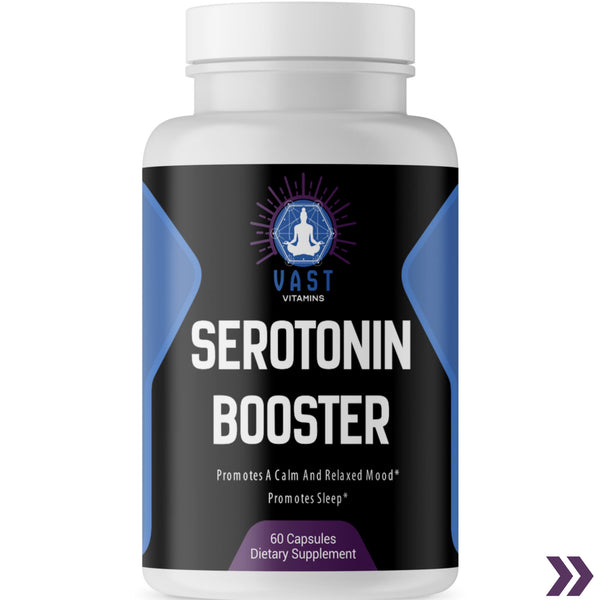
If you're also looking to support serotonin pathways — which interact closely with anxiety and panic regulation — our 5-HTP capsules provide serotonin precursor support alongside calcium for nervous system health.
4. Kava Kava ★★☆ — Moderate Evidence (with Safety Caveat)
Kava has real clinical evidence behind it — more than most herbal supplements. It also has a real safety consideration that demands honest discussion. Both things are true, and a responsible guide covers both.
The mechanism: kavalactones bind GABA-A receptors at a different site than benzodiazepines (which is part of why kava doesn't produce the same tolerance and dependency profile). Kavalactones also block sodium and calcium channels, contributing to their anxiolytic effect.
The clinical picture:
- Sarris 2018 systematic review (PMID 30396607): Overall positive anxiolytic evidence across multiple trials, with kava producing statistically significant reductions on the Hamilton Anxiety scale vs. placebo.
- Sarris et al. 2020 RCT (PMID 31813230): The largest kava GAD trial to date — a 16-week RCT — produced non-significant results for diagnosed GAD specifically. This should be acknowledged honestly.
The honest framing: kava has consistent evidence for anxiety symptoms and situational anxiety. The evidence for formally diagnosed GAD is less consistent. For panic attack prevention and occasional situational use, the overall evidence base is reasonable.
Liver Safety — Read This Before Taking Kava
- Hepatic adverse reactions are rare and typically associated with excessive dosing, alcohol co-use, or pre-existing liver disease (WHO 2007 report)
- Do not exceed 8 weeks of continuous use without a break
- Avoid kava if you: have pre-existing liver conditions, take hepatotoxic medications, or drink alcohol regularly
- Choose aqueous-extracted (water-extracted) preparations — traditional Polynesian preparations — rather than ethanol or acetone-extracted products. Water extraction has a better safety profile.
- Kava is a powerful, evidence-backed botanical. Treat it with appropriate respect.
Dosage: 120–280 mg kavalactones/day from a standardized extract. Do not use non-standardized preparations where kavalactone content is unknown.
5. GABA Supplements ★☆☆ — Emerging Evidence
The standard dismissal of GABA supplements goes like this: "GABA can't cross the blood-brain barrier, so taking it orally does nothing." This is both partially true and increasingly incomplete as a description of the evidence.
The classical pharmacology is accurate: oral GABA does not readily cross the blood-brain barrier in the way that, say, L-theanine does. This was the reason researchers were skeptical. But consistent consumer reports of calming effects, particularly in Japan where GABA supplements have been used for decades, suggested something was happening that the BBB-only view didn't explain.
The emerging answer is the gut-brain axis:
- PMC12093412 (Frontiers in Neuroscience, 2025): Proposed that oral GABA may work primarily through gut-derived GABA pathways and the gut-brain axis — not through direct CNS entry. The gut produces GABA; oral supplementation may support and enhance this gut-derived signaling pathway.
- PMC12022253 (npj Science of Food, 2025): Long-term GABA supplementation in mice reduced anxiety behaviors and increased prefrontal cortex GABA levels — suggesting some systemic effect exists, even if the precise mechanism is still being mapped.
The honest position: we don't fully understand yet how oral GABA reduces anxiety. But the growing evidence points toward the gut-brain axis as the mechanism — and this framing, rather than the blunt "it can't work," is both more accurate and more useful.
For more on the gut-brain connection to anxiety, see our guide on gut-brain connection supplements.
Dosage: Most studies use 100–200 mg/day; consumer products typically provide 250–500 mg. The research base for GABA is still developing — start with a lower dose.
The Supplement Timing Framework — Prevention vs. Acute Support

Understanding how to stop panic attacks naturally requires knowing when to take what. This is the section no other article on this topic covers — and it's the most practically useful information for someone dealing with panic attacks. Panic events are acute and unpredictable. The strongest argument for a daily supplement protocol is that you can't know when an episode will occur. Prevention is the strategy.
Dosing and Timing Reference
| Supplement | Prevention Dose | Daily Timing | Acute Use? | Acute Onset |
|---|---|---|---|---|
| Lavender (Silexan) | 80 mg | With food, daily | No — daily use only | 2–4 weeks |
| Chamomile extract | 500 mg | With breakfast | No — daily use only | 2–4 weeks |
| L-theanine | 200 mg | Morning or as needed | Yes | 30–60 minutes |
| GABA | 100–250 mg | Breakfast or evening | Yes (consumer reports) | Variable |
| Kava | 120–280 mg kavalactones | As needed, max 8 weeks continuous | Yes (situational) | 30–60 minutes |
What to Avoid During High-Anxiety Periods
The flip side of the supplement timing framework is knowing what can trigger or worsen panic. Several common supplements and substances directly stimulate the sympathetic nervous system:
- High-dose caffeine: Coffee, pre-workouts, and energy drinks directly activate the same stress pathways panic attacks exploit. If you're prone to panic, cutting or reducing caffeine during high-anxiety periods is one of the most effective interventions available.
- Stimulant-based pre-workouts: Many contain synephrine, high-dose caffeine (300+ mg), and other sympathomimetic compounds. These are panic triggers for susceptible individuals.
- Mega-dose B vitamins (above 100 mg of B6 or very high B3): At standard multivitamin doses, B vitamins are fine. At the megadose levels found in some stress formulas or standalone B6 supplements, excess B6 and niacin can paradoxically cause or worsen anxiety and palpitations in some people. Standard supplementation is not a concern — this applies to therapeutic megadosing only.
- Alcohol: Short-term anxiolytic effect, long-term panic amplifier. Regular alcohol use depletes GABA receptor sensitivity over time — the opposite of what these supplements are working to achieve.
If you're looking for a consistent daily foundation for nervous system support, our anxiety support capsules combine evidence-backed botanicals including chamomile and calming adaptogenic compounds in a daily formula designed for this kind of consistent use.
Other Supplements Worth Knowing About
The supplements above are the ones with the most direct relevance to panic and acute anxiety. If you're looking for supplements that address chronic background anxiety — the ongoing tension, worry, and stress that underlies panic disorder — our complete guide to anxiety supplements goes deeper on ashwagandha (★★★ strong evidence for cortisol and chronic stress), magnesium, omega-3s, and more.
For 5-HTP and how it interacts with the serotonin pathways involved in mood and anxiety, see our guide to increasing serotonin naturally — though note that 5-HTP should not be combined with SSRIs or SNRIs without medical supervision due to serotonin syndrome risk.
How Supplements and Lifestyle Work Together

Breathing techniques, grounding exercises, and cognitive approaches to panic are genuinely effective in-the-moment tools — they interrupt the panic cycle at the psychological level. Supplements work at the biochemical level: they reduce the frequency and intensity of attacks and support the nervous system between episodes.
These aren't competing approaches. Supplements lower the baseline excitability of the nervous system; behavioral techniques help when an episode breaks through anyway. Both are worth having in your toolkit.
Support Your Nervous System Daily
Our anxiety support capsules combine several of the evidence-backed botanicals covered in this guide, including chamomile and calming adaptogenic compounds, in a daily formula designed for consistent nervous system support.
Frequently Asked Questions
Can supplements stop a panic attack that is already happening?
For an attack already underway, options are limited — but L-theanine is the exception. At 200–400 mg, L-theanine's effects begin within 30–60 minutes (PMC8475422), making it the only supplement on this list with meaningful acute-response potential.
All other supplements — chamomile, lavender, kava, GABA — rely on daily consistency and cumulative therapeutic concentrations. They don't provide rapid in-moment relief, but they can significantly reduce how often attacks occur.
How long before supplements reduce panic attack frequency?
For most herbal options, expect 2–4 weeks of daily use before meaningful reduction in frequency. The University of Pennsylvania chamomile trial demonstrated sustained anxiety remission at 26 weeks (PMC5650245); the Kasper Silexan trials showed significant improvement at 10 weeks (PMID 20512042).
L-theanine may produce some benefit faster — within the first week of daily use, many users report reduced background anxiety. These aren't instant fixes, but the evidence shows they accumulate into genuine, measurable effects.
Is kava safe to take for panic attacks?
Kava is safe for short-term use at standard doses in healthy adults without pre-existing liver conditions. Key safety parameters: limit continuous use to 8 weeks, avoid combining with alcohol, avoid with hepatotoxic medications, and choose standardized aqueous extracts rather than ethanol-extracted products.
The WHO 2007 report found hepatic adverse reactions to be rare and largely associated with misuse — excessive doses, alcohol co-use, or pre-existing liver pathology (PMID 30396607). If you're healthy and respect these parameters, kava's evidence-to-risk profile is reasonable.
What is the difference between these supplements and prescription anxiety medications?
Prescription medications — particularly benzodiazepines and SSRIs — typically have faster onset and more powerful acute effects in clinical anxiety. Benzodiazepines carry real risks of dependency and tolerance; SSRIs take 4–6 weeks to work and come with their own side effect profiles.
Natural supplements generally have a better safety profile for long-term daily use and no dependency risk (as confirmed in the Silexan vs. lorazepam comparison — PMID 19962288). They are not equivalent substitutes for severe cases, but they are a legitimate option for prevention and support alongside medical treatment. The right choice depends on severity — a conversation for you and your healthcare provider.
Can I take chamomile, lavender, and L-theanine together?
Yes — these three work through complementary mechanisms and can be stacked. Chamomile and lavender both interact with GABA receptor systems; L-theanine promotes alpha brainwave activity and dampens the HPA stress axis. There are no known drug interactions between these three specifically.
Standard guidance: add one at a time to assess your individual response before combining, and always disclose all supplements to your prescribing doctor, particularly if you take any psychiatric medications.
Does a GABA supplement actually work if it can't cross the blood-brain barrier?
The "GABA can't cross the BBB" claim is increasingly incomplete. Emerging 2025 research (PMC12093412) suggests oral GABA may work primarily through the gut-brain axis — supporting gut-derived GABA signaling rather than directly entering the brain.
A 2025 npj Science of Food study found long-term GABA supplementation reduced anxiety behaviors and increased prefrontal cortex GABA levels in animal models (PMC12022253). The mechanism isn't fully mapped, but "it doesn't work because of the BBB" is no longer the definitive answer. User reports across decades of Japanese market use, combined with this emerging research, suggest oral GABA does have a real anxiolytic effect — the science is catching up to the observation.
These statements have not been evaluated by the FDA. This product is not intended to diagnose, treat, cure, or prevent any disease. If you experience frequent or severe panic attacks, please consult a healthcare provider. Natural supplements support nervous system health but are not a substitute for professional mental health care.
Sources
- Kasper S, et al. (2010). Silexan, an orally administered Lavandula oil preparation, is effective in the treatment of 'mixed anxiety and depressive condition'. A proof-of-concept study. Phytomedicine. PMID 19962288
- Woelk H, Schläfke S. (2010). A multi-center, double-blind, randomised study of the Lavender oil preparation Silexan in comparison to Lorazepam for generalized anxiety disorder. Phytomedicine. PMID 20512042
- Kasper S, et al. (2014). Lavender oil preparation Silexan is effective in generalized anxiety disorder — a randomized, double-blind comparison to placebo and paroxetine. International Journal of Neuropsychopharmacology. PMID 24456909
- Hieu TH, et al. (2023). Meta-analysis of Silexan efficacy for anxiety. PMC. PMC10465640
- Hieu TH, et al. (2024). Chamomile for anxiety — systematic review of 10 clinical trials. PMC. PMC11109927
- Keefe JR, et al. (2017). Short-term open-label chamomile (Matricaria chamomilla L.) therapy of moderate to severe generalized anxiety disorder. Phytomedicine. PMC5650245
- Hidese S, et al. (2021). Effects of L-theanine on stress-related symptoms and cognitive functions: a randomized controlled trial. Nutrients. PMC8475422
- Hidese S, et al. (2019). Effects of L-theanine administration on stress-related symptoms and cognitive functions in healthy adults: a randomized controlled trial. Nutrients. PMC6836118
- Sarris J, et al. (2020). Kava in the treatment of generalized anxiety disorder: a double-blind, randomized, placebo-controlled study. Journal of Clinical Psychopharmacology. PMID 31813230
- Sarris J, et al. (2018). Kava: A Comprehensive Review of Efficacy, Safety, and Psychopharmacology. Australian and New Zealand Journal of Psychiatry. PMID 30396607
- Hepsomali P, Groeger JA. (2025). GABA and the gut-brain axis: emerging evidence for oral supplementation. Frontiers in Neuroscience. PMC12093412
- Zhou X, et al. (2025). Long-term GABA supplementation reduces anxiety-like behaviors and increases prefrontal GABA levels. npj Science of Food. PMC12022253