


















Ashwagandha for Women: Benefits, Dosage & What the Evidence Actually Shows

Women are the fastest-growing segment of ashwagandha users — and the reasons go well beyond stress. From menopause symptoms to libido, sleep, and hormonal balance, the clinical research on ashwagandha for women is more robust than most people realize. This guide covers what the studies actually show, which goals have strong evidence vs. emerging evidence, what dosage to use for each, and one critical safety warning every woman should know before starting.
Key facts at a glance:
- Ashwagandha has RCT evidence for 4+ women-specific outcomes: stress/cortisol, sexual function, menopause symptoms, and sleep quality
- Standard effective dose: 300–600 mg/day of root extract for 8+ weeks
- Critical safety note: Avoid during pregnancy — ashwagandha has potential uterine-stimulant activity and should not be used during any trimester
What Ashwagandha Does (Quick Overview)
Ashwagandha (Withania somnifera) is an adaptogenic herb from Ayurvedic medicine. Its active compounds — called withanolides — work primarily by modulating the HPA axis (hypothalamic-pituitary-adrenal), the system that governs your cortisol stress response.
This mechanism is why its most consistent benefit is stress and cortisol reduction, and why that benefit cascades into sleep, hormonal balance, and mood. For the full breakdown, see our complete guide to ashwagandha benefits.
Ashwagandha Benefits for Women — What the Research Shows
Not all of ashwagandha's benefits are equally well-evidenced. The ratings below reflect the strength and consistency of the clinical data for each women-specific outcome.
Evidence rating key: ★★★ = multiple high-quality RCTs with consistent results | ★★☆ = solid evidence with some caveats | ★☆☆ = emerging evidence, shows promise but needs more research
Stress and Cortisol Reduction ★★★ (Strong Evidence)
Ashwagandha's cortisol-lowering effect is its best-evidenced benefit and applies equally — and arguably more relevantly — to women. A 2024 meta-analysis (PMC12242034) found significant cortisol reduction and Perceived Stress Scale improvement versus placebo across multiple RCTs.
Women face distinct cortisol disruption patterns at key life stages: perimenopausal hormonal shifts amplify HPA axis reactivity, postpartum cortisol dysregulation is well-documented, and chronic psychological stress affects women at higher rates than men. This makes ashwagandha's stress-reduction mechanism especially relevant for women specifically.
For the full evidence breakdown on stress and anxiety, see our ashwagandha benefits guide and our roundup of natural anxiety supplements.
Sexual Function and Libido ★★☆ (Moderate Evidence)
Two RCTs specifically in women have shown ashwagandha significantly improves sexual function, as measured by the Female Sexual Function Index (FSFI) — a validated clinical tool assessing desire, arousal, lubrication, orgasm, and satisfaction.
- Study 1 (PMC4609357): 50 healthy women, 300 mg twice daily, 8 weeks — FSFI scores improved from 14.20 to 22.62 vs. 14.17 to 19.25 in the placebo group (p<0.0001). All six FSFI subscales improved: desire, arousal, lubrication, orgasm, satisfaction, and pain.
- Study 2 (PubMed 36447681): 62 healthy women, 600 mg/day, 8 weeks — significant improvement in FSFI total score (p=0.002) and sexual desire subscale (p<0.0001).
Both studies used healthy women without diagnosed hormonal conditions — this is a direct libido effect, not just a downstream benefit of fixing another problem. The likely mechanism: cortisol is a known inhibitor of sexual desire, and reducing it removes a significant brake on libido. Rated ★★☆ rather than ★★★ because two well-designed trials, while solid, is not yet a large multi-study body of evidence.
Menopause and Perimenopause Symptom Relief ★★☆ (Moderate Evidence)

A well-designed RCT found significant relief across multiple menopause symptoms in perimenopausal women. The Gopal 2021 trial (doi:10.1111/jog.15030) studied 100 perimenopausal women taking 300 mg twice daily for 8 weeks.
Results versus placebo:
- Significant reduction in total Menopause Rating Scale (MRS) score (p<0.0001)
- Improvements across all three MRS domains: psychological (mood, anxiety, depressive mood), somato-vegetative (hot flashes, sleep problems, heart discomfort), and urogenital symptoms
- Statistically significant increase in serum estradiol levels
This covers the most-complained-about menopause symptoms: hot flashes, disrupted sleep, mood changes, and reduced libido. The estradiol finding is particularly interesting — it suggests ashwagandha may support the body's own estrogen production during the perimenopausal transition. One important population note: this study was in perimenopausal women (transitioning), not post-menopausal. Evidence in post-menopausal women is thinner. For the sleep component of menopause, ashwagandha's sleep benefits are covered separately.
Menstrual Cycle and PMS Support ★☆☆ (Emerging Evidence)
This is the most commonly overclaimed benefit of ashwagandha for women — and the most important place to be honest. There are no RCTs studying ashwagandha and PMS as a primary outcome.
What the science does support is the mechanism: cortisol dysregulation worsens PMS symptoms, including breast tenderness, mood changes, and cramping. Ashwagandha's cortisol-lowering effect provides a plausible indirect benefit pathway. The anti-inflammatory effect (NF-κB pathway inhibition) may also reduce prostaglandin-driven cramping — but this is preclinical data, not clinical outcome evidence.
Many women report improved menstrual comfort when using ashwagandha regularly. The mechanism is plausible and the safety profile is well-established. But the honest rating is ★☆☆: shows promise, needs direct clinical trials to confirm. ★☆☆ does not mean "doesn't work" — it means the evidence is still building.
Thyroid Function Support ★☆☆ (Emerging — with Safety Caveat)

Thyroid conditions affect women 5–8 times more often than men, making this section especially relevant for a women's health article. There is one noteworthy RCT and an important safety counterbalance.
The benefit evidence: A 2018 RCT (PubMed 28829155) studied 50 subclinical hypothyroid patients — meaning elevated TSH with normal T3/T4 — taking 600 mg/day for 8 weeks. Ashwagandha significantly improved all thyroid markers: TSH improved 17.4%, T3 increased 41.5%, T4 increased 19.6% versus placebo.
The safety counterbalance: A published case report (PMC9035336) documents thyrotoxicosis (thyroid overstimulation) following ashwagandha supplementation. The same thyroid-stimulating effect that may benefit subclinical hypothyroidism can cause problems in people with hyperthyroidism or those already on thyroid medication (levothyroxine).
Bottom line: If you have any diagnosed thyroid condition or take thyroid medication, consult your doctor before using ashwagandha. This is non-negotiable.
PCOS Support ★☆☆ (Emerging — Honest Framing)
PCOS is one of the most-searched women's health terms, and readers deserve an accurate answer rather than either silence or overclaim. As of 2025, there are no RCTs specifically studying ashwagandha in women with PCOS.
What exists is encouraging but preliminary:
- A 2025 systematic review (PubMed 41249015) reviewing sex-specific reproductive hormonal outcomes notes ashwagandha's effects on FSH, LH, and gonadotropins — hormones directly dysregulated in PCOS. Evidence in female PCOS populations is described as preliminary.
- A 2025 herbal PCOS treatment systematic review (PMC12225173) identifies ashwagandha as a promising candidate but notes evidence is insufficient for clinical recommendation.
The mechanistic rationale is sound: PCOS is worsened by cortisol dysregulation and insulin resistance, and ashwagandha addresses both. But promising mechanisms are not the same as clinical outcomes. Frame it this way: something worth discussing with your doctor, not a treatment to self-prescribe for PCOS.
Ashwagandha Dosage for Women

No top-ranking article provides a goal-specific dosage table for women. The table below maps each goal to the protocol actually studied in clinical trials — so you can match your dose to the research.
| Goal | Studied Dose | Duration | Notes |
|---|---|---|---|
| Stress and cortisol | 300–600 mg/day | 8–12 weeks | Most-studied dose range; results build progressively over time |
| Sexual function / libido | 300 mg twice daily OR 600 mg once daily | 8 weeks | Both RCT protocols showed significant effect; split dose may reduce GI side effects |
| Menopause symptoms | 300 mg twice daily | 8 weeks | From Gopal 2021 trial; evening dose may support the sleep component of MRS symptoms |
| Sleep quality | 600 mg/day | 8+ weeks | See our dedicated guide to ashwagandha's sleep benefits for full detail |
| Thyroid (subclinical hypothyroid only) | 600 mg/day | 8 weeks | Use only under physician guidance if any thyroid condition is present |
Additional dosage notes:
- Root extract standardized to withanolides (2.5–5%) is preferred over raw powder — it delivers predictable active compound concentrations
- Consistency matters more than timing; morning and evening dosing are both used successfully in trials
- Cycling is recommended: 8–12 weeks on, 2–4 weeks off — long-term safety beyond 3 months is not fully established
- Start with 300 mg/day and assess tolerance before increasing to 600 mg
Safety for Women — What You Must Know Before Starting
Pregnancy — DO NOT USE
Warning: Ashwagandha should not be taken during pregnancy.
Ashwagandha has evidence of potential uterotonic (uterine-stimulating) activity in animal models. While recent human data is more reassuring, the evidence is insufficient to establish safety during pregnancy.
Standard medical guidance — including the NIH ODS Ashwagandha fact sheet — recommends avoiding ashwagandha during all trimesters. If you are pregnant or think you may be pregnant, do not take ashwagandha.

Breastfeeding
Insufficient safety data exists for ashwagandha use during breastfeeding. Most practitioners recommend avoiding it while nursing. If you are breastfeeding, skip ashwagandha until you have stopped — this is the conservative but appropriate guidance given the current evidence gaps.
If You Are Trying to Conceive
The situation here is more nuanced. The fertility-supporting mechanisms — FSH/LH balance, cortisol reduction, potential antioxidant support for egg quality — are a theoretical benefit in the pre-conception window. However, if conception occurs, you would need to discontinue immediately.
If you are actively trying to conceive, discuss with your doctor before starting. Some practitioners cautiously support use in the pre-conception cycle only — this is an individual clinical decision, not a blanket recommendation.
Drug Interactions Relevant to Women
- Thyroid medications (levothyroxine): Ashwagandha may stimulate thyroid function — potential additive or antagonistic effect. Monitor TSH if combining.
- Hormonal contraceptives / HRT: No known direct interaction, but data is limited. Disclose to your prescribing doctor.
- Sedatives / anxiolytics: Additive sedation is possible; reduce dose or monitor closely.
- Immunosuppressants: Ashwagandha stimulates immune activity — potential conflict with immunosuppressive therapy.
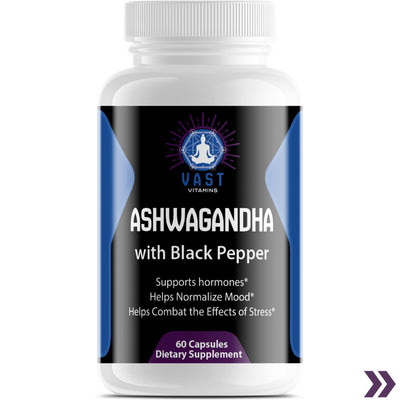
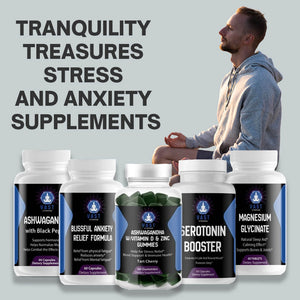
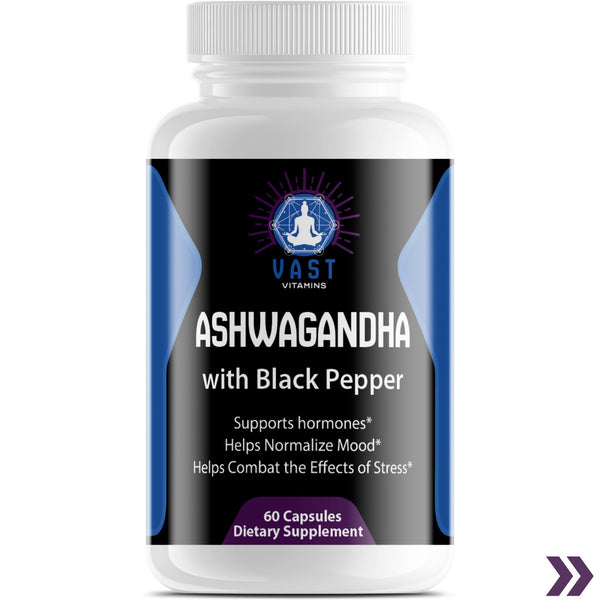
- Piperine (product-specific note): The Vast Vitamins ashwagandha capsules contain black pepper extract (piperine), which inhibits the CYP3A4 enzyme system. This affects the metabolism of many medications, including statins, blood pressure drugs, and some anticoagulants. For the full interaction detail, see our guide to ashwagandha and black pepper — bioavailability and drug interactions.
How to Take Ashwagandha (Practical Tips for Women)
Most women in clinical trials took ashwagandha with food — this reduces the most common side effect (GI upset) significantly.
- Morning dose: Works best for stress management and cortisol regulation throughout the day
- Evening dose: Preferred if your primary goal is sleep quality; matches the cortisol-lowering effect to your body's natural evening wind-down
- Split dosing: If taking 600 mg/day, splitting into 300 mg morning and 300 mg evening matches the FSFI and menopause trial protocols and may reduce GI side effects
- Start low: Begin at 300 mg/day for the first 1–2 weeks to assess tolerance before increasing
What to expect on your timeline:
- 2–4 weeks: Most women notice improved stress response and sleep onset first
- 6–8 weeks: Hormonal, libido, and menopause benefits take the full trial duration to manifest
- Signs it's working: Reduced reactivity to stressors, easier sleep onset, improved energy levels, and for libido goals, the FSFI improvements tend to be gradual rather than sudden
For a convenient, standardized dose, our ashwagandha capsules combine 1300mg of root extract with black pepper (piperine) for enhanced absorption — no measuring, no powders, no taste issues.
Try Vast Vitamins Ashwagandha 1300mg and Black Pepper
Our ashwagandha capsules combine 1300mg of root extract with black pepper for enhanced bioavailability — a convenient, standardized dose formulated to support stress resilience, sleep quality, and hormonal balance in women.
Frequently Asked Questions
Can ashwagandha help with anxiety in women?
Yes — ashwagandha has some of the strongest clinical evidence in the supplement category for anxiety reduction. A 2024 meta-analysis (PMC12242034) found significant improvements in the Hamilton Anxiety Rating Scale versus placebo. The cortisol-lowering effect is the likely mechanism. For a comprehensive breakdown, see our ashwagandha benefits guide.
Is ashwagandha safe during pregnancy?
No — ashwagandha should not be used during pregnancy. Evidence of potential uterotonic activity, combined with insufficient human safety trials, means avoidance is the standard recommendation across all trimesters. The NIH ODS and most integrative medicine practitioners recommend discontinuing ashwagandha if you are pregnant or become pregnant.
Can ashwagandha help with menopause symptoms?
Yes, there is good clinical evidence for perimenopausal women. The Gopal 2021 RCT found significant reductions in hot flashes, mood disturbances, sleep problems, and urogenital symptoms, plus a statistically significant increase in serum estradiol after 8 weeks at 300 mg twice daily. Evidence is stronger for perimenopause than post-menopause.
Does ashwagandha boost libido in women?
Two clinical trials specifically measuring female sexual function show yes. Both used the FSFI (Female Sexual Function Index) as the outcome measure and found significant improvements across desire, arousal, lubrication, orgasm, and satisfaction after 8 weeks. The effect appears to work through cortisol reduction removing a known inhibitor of sexual desire.
Can ashwagandha help with PCOS?
The evidence is emerging but not yet clinically established. No RCTs have specifically studied ashwagandha in women with PCOS. Two 2025 systematic reviews note promising effects on FSH, LH, and gonadotropins and identify ashwagandha as a promising candidate — but both conclude the evidence is insufficient for clinical recommendation. Discuss with your doctor if you have PCOS and are considering ashwagandha.
What is the best ashwagandha dose for women?
300–600 mg/day of standardized root extract for 8+ weeks is the dose range used across clinical trials in women. For stress and cortisol, 300–600 mg/day works. For libido and menopause benefits, trials used 300 mg twice daily or 600 mg/day. See the dosage table above for goal-specific guidance.
Can ashwagandha affect the thyroid?
Yes, in both directions. One RCT found improved TSH, T3, and T4 in subclinical hypothyroid patients. But a case report of thyrotoxicosis (thyroid overstimulation) has also been published. If you have any thyroid condition or take thyroid medication, consult your doctor before using ashwagandha.
How long does ashwagandha take to work for women?
Stress and sleep improvements typically appear within 2–4 weeks. Hormonal, libido, and menopause benefits take the full 8-week clinical trial duration to manifest. Consistency is critical — most women who report no benefit stopped before the 6-week mark.
Can ashwagandha affect hormones in women?
Yes, modestly. The Gopal 2021 trial documented a statistically significant increase in serum estradiol in perimenopausal women. Reproductive hormone reviews note effects on FSH and LH. The primary hormonal effect, however, is cortisol reduction via the HPA axis — this is what drives most of the downstream benefits including mood, sleep, and libido.
Are there side effects of ashwagandha for women?
Ashwagandha is well-tolerated at standard doses. The most common side effects are GI upset and loose stools — taking it with food reduces this significantly. Drowsiness can occur; evening dosing turns this into a feature rather than a side effect. Rare but serious: liver toxicity has been reported at high doses. Most importantly — avoid during pregnancy entirely.
Can I take ashwagandha while breastfeeding?
No safety data is available for ashwagandha use during breastfeeding. The precautionary recommendation is to avoid it while nursing. Resume after you have finished breastfeeding if you wish to try it.
Can ashwagandha help with PMS?
There are no clinical trials specifically studying ashwagandha for PMS outcomes. However, the cortisol-lowering mechanism provides a plausible indirect benefit for PMS symptoms that are worsened by stress (mood changes, breast tenderness). Many women report improvements in menstrual comfort with regular ashwagandha use. This is ★☆☆ emerging territory — promising but not yet clinically proven.
Sources
- PMC12242034 — 2024 Meta-Analysis: Ashwagandha for stress and anxiety (BJPsych Open) — cortisol reduction and PSS improvement
- PMC4609357 — Pilot RCT: Ashwagandha root extract and female sexual function (FSFI) — 50 women, 300mg twice daily, 8 weeks
- PubMed 36447681 — 2022 RCT: Ashwagandha and female sexual function — 62 women, 600mg/day, 8 weeks, significant FSFI improvement
- Gopal et al. 2021 (doi:10.1111/jog.15030) — RCT: Ashwagandha in perimenopausal women — 100 women, Menopause Rating Scale improvement, estradiol increase
- PubMed 28829155 — Sharma et al. 2018 RCT: Ashwagandha in subclinical hypothyroid patients — TSH, T3, T4 improvements
- PMC9035336 — Case report: Thyrotoxicosis following ashwagandha supplementation (safety note)
- PubMed 41249015 — 2025 Systematic review: Sex-specific reproductive hormonal outcomes of ashwagandha
- PMC12225173 — 2025 Systematic review: Herbal treatments for PCOS — ashwagandha noted as promising, evidence preliminary
- NIH ODS Ashwagandha Fact Sheet — Authoritative safety reference including pregnancy guidance
These statements have not been evaluated by the Food and Drug Administration. This product is not intended to diagnose, treat, cure, or prevent any disease. Always consult a qualified healthcare provider before starting any new supplement, especially if you are pregnant, breastfeeding, trying to conceive, or taking prescription medications.