



















Ashwagandha for Sleep: What the Science Actually Shows

Ashwagandha for sleep is one of the most clinically supported use cases for this adaptogenic herb. Multiple randomized controlled trials confirm it can reduce the time it takes to fall asleep, improve sleep quality, and increase total sleep time — with the most significant benefits seen in people dealing with insomnia or stress-driven poor sleep.
The studied dose is 600 mg/day for at least 8 weeks. That timeline matters: ashwagandha is not a sedative; it works by shifting your stress hormone profile over weeks, not nights.
Quick Summary
- Evidence rating: ★★☆ (Moderate — consistent across RCTs, strongest in insomnia populations)
- Studied dose: 600 mg/day for 8–10 weeks
- Best candidates: People with stress-related sleep disruption or diagnosed insomnia
- Modest benefit group: Generally healthy sleepers (smaller effect size)
- Active compounds: Triethylene glycol (direct sleep induction), withanolides (GABAergic + cortisol modulation)
Ashwagandha is a root extract used in Ayurvedic practice for centuries, but what sets modern interest apart is the growing body of clinical research. This article covers the three distinct mechanisms behind its sleep effects, what the dosage evidence actually says, who benefits most — and critically, who benefits less.
For a full overview of ashwagandha's benefits beyond sleep — including stress, athletic performance, and cognitive function — see our complete ashwagandha benefits guide.
Does Ashwagandha Actually Help You Sleep?
Yes — the clinical evidence is clear enough to act on, with one important nuance: the size of the benefit depends heavily on whether you have insomnia or stress-related sleep problems versus being a generally healthy sleeper.
A 2021 meta-analysis published in PLOS ONE (PMC8462692) pooled 5 RCTs with approximately 400 participants. It found significant improvements in:
- Sleep onset latency (time to fall asleep) — standardized mean difference of -0.53
- Total sleep time
- Sleep efficiency
- Self-reported sleep quality
The key finding in that meta-analysis: effects were more pronounced in insomnia populations than in healthy sleepers. This distinction drives almost every practical recommendation below.
The most specific trial was a 2020 RCT using 600 mg/day of KSM-66 (the most clinically studied ashwagandha extract) over 10 weeks in people with diagnosed insomnia. Versus placebo, participants showed significant improvements across every sleep metric measured: sleep quality score, sleep onset latency, total sleep time, and wake after sleep onset.
For healthy adults without sleep complaints, the evidence is more modest. Ashwagandha can still improve self-reported sleep quality and reduce the time it takes to wind down — but if you currently sleep reasonably well, the improvement will be smaller and less consistent than in people with insomnia or chronic stress.
How Ashwagandha Affects Sleep — Three Distinct Mechanisms

Most articles about ashwagandha for sleep treat the evidence as a single block: "ashwagandha helps you sleep." That misses something important. There are three biologically distinct pathways at work, each with a different evidence level and different practical implication. Understanding them helps you set realistic expectations.
Evidence rating key: ★★★ = multiple high-quality RCTs with consistent results | ★★☆ = solid evidence with some caveats | ★☆☆ = emerging evidence, shows promise but needs more research
Triethylene Glycol (TEG) — The Sleep-Specific Compound ★★☆
A 2017 study published in PLOS ONE (PMC5313221) identified triethylene glycol (TEG) as the primary sleep-inducing compound in ashwagandha leaves.
The researchers compared two ashwagandha extracts in mice: a water extract (high in TEG, low in withanolides) and an alcohol extract (high in withanolides, low in TEG). Only the TEG-rich water extract significantly increased NREM sleep.
The alcohol extract — despite containing the withanolides that most ashwagandha research focuses on — did not produce meaningful sleep effects on its own.
What this means practically:
- TEG, not withanolides, appears to drive the direct sleep-induction effect
- TEG is found in highest concentrations in ashwagandha leaves, not the root
- Most commercial ashwagandha supplements use root extract (standardized for withanolides)
- Human pharmacokinetic data on isolated TEG is still limited — clinical RCTs have tested whole root extract, not TEG in isolation
This mechanism is essentially absent from consumer-facing articles about ashwagandha and sleep. It explains why ashwagandha's sleep benefits can't be fully predicted from the withanolide content alone, and why whole-plant preparations may differ from isolated withanolide supplements.
GABAergic Pathway — Calming Overactive Brain Activity ★★☆
GABA is the brain's primary inhibitory neurotransmitter — think of it as the nervous system's dimmer switch. Withanolides in ashwagandha interact with GABA-A receptors, the same receptor system targeted by benzodiazepines and many OTC sleep aids.
This interaction promotes neural inhibition: it quiets the hyperarousal and racing thoughts that prevent sleep onset in many people with stress-related insomnia. Preclinical models using enzyme-treated KSM-66 root extract have shown increased sleep duration via GABA-A receptor binding.
The critical distinction here: ashwagandha's GABAergic activity is modulatory, not sedating. It gently promotes inhibitory signaling rather than forcing sedation. This is why:
- Ashwagandha doesn't knock you out on night one
- The effect builds over weeks of consistent use as the brain adapts
- You don't develop the tolerance or dependency issues associated with benzodiazepines
If you've been taking ashwagandha for 2–3 weeks and wondering why it isn't "working," this is the mechanism to understand. The system needs time to recalibrate.
HPA Axis and Cortisol Reduction ★★★
This is ashwagandha's best-evidenced mechanism overall — and it explains much of the sleep benefit, especially in stressed adults.
Cortisol follows a natural rhythm: it peaks in the morning to drive wakefulness and alertness, then drops through the day. By evening, it should be low enough for the brain to transition into sleep mode.
Chronic stress disrupts this rhythm — elevated evening cortisol keeps the brain alert when it should be winding down, delaying sleep onset and reducing time in deep sleep stages.
Two well-designed RCTs quantify ashwagandha's cortisol effect:
- 2012 RCT (PMC3573577): 300 mg twice daily for 60 days — cortisol reduced by 27.9% versus placebo
- 2019 RCT using KSM-66 (PMC6750292): 240 mg/day for 60 days — cortisol reduced by 22.2% versus placebo
A cortisol reduction of 22–28% is clinically meaningful. For someone whose poor sleep is primarily driven by a stress-activated HPA axis, this is the mechanism most likely to produce noticeable results.
For the full cortisol and stress evidence base — including the 2024 meta-analysis and anxiety trial data — see our ashwagandha benefits overview. The pillar article goes deep on stress and cortisol; this satellite focuses on how that cortisol pathway connects specifically to sleep.
Ashwagandha Dosage for Sleep — What Clinical Trials Used

The dosage question for sleep is one of the most searched ashwagandha topics, and the answer is more specific than most sources acknowledge. Here's what the actual trials used:
| Population | Studied Dose | Duration | Outcome |
|---|---|---|---|
| Insomnia patients | 600 mg/day (KSM-66) | 8–10 weeks | Significant improvement in sleep latency, quality, total sleep time |
| Stressed adults | 300–600 mg/day | 8 weeks | Improved self-reported sleep quality; cortisol reduction |
| General healthy adults | 300 mg once or twice daily | 8+ weeks | Modest sleep quality improvement |
600 mg/day is the threshold dose where sleep benefits are most consistently observed across populations. Lower doses (300 mg) show effects too, but the evidence is weaker for sleep specifically.
Duration matters as much as dose. Most people who try ashwagandha and report "it didn't work" stopped before the 8-week mark. The cortisol and GABAergic mechanisms both require time to produce measurable change.
Form also matters. The most studied extract for sleep is KSM-66 — a root extract standardized to 5% withanolides with over 20 clinical trials behind it. When shopping for an ashwagandha supplement, look for a standardized extract rather than raw ashwagandha powder.
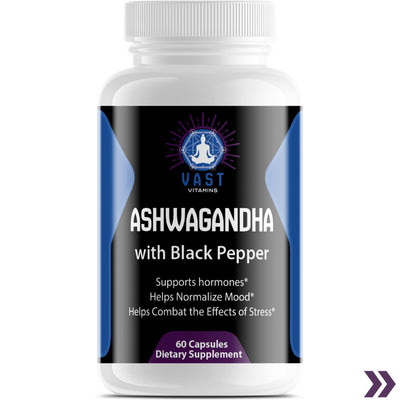
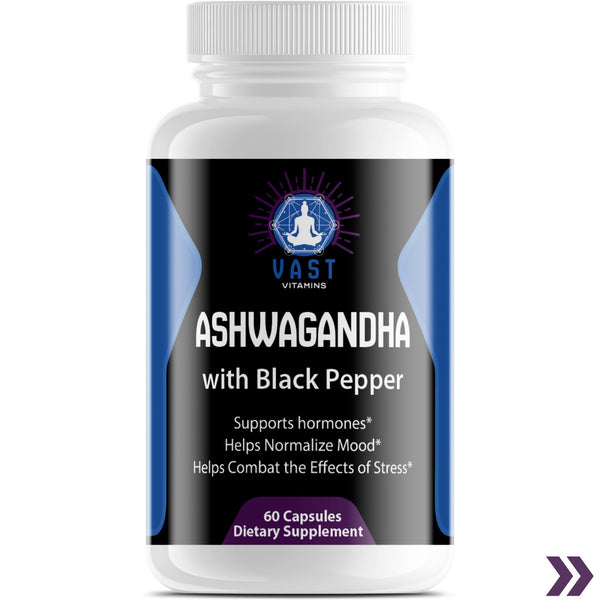
Our ashwagandha capsules deliver 1,300 mg per serving — above the studied threshold — combined with black pepper extract (piperine) for enhanced bioavailability. Piperine reduces first-pass liver metabolism, meaning more of the active withanolides reach systemic circulation. For more on how piperine works with ashwagandha, see our guide to ashwagandha and black pepper for enhanced absorption.
When to Take Ashwagandha for Sleep
Evening use is logical for sleep — but it is not required. Both morning and evening dosing protocols have produced sleep benefits in clinical trials.
What matters most is consistency, not clock time. The cortisol-modulating and GABAergic effects accumulate over weeks; missing a day or two occasionally is less problematic than taking it sporadically.
That said, here's why evening timing makes practical sense for sleep as the primary goal:
- Taking with dinner or 1–2 hours before bed aligns with the body's natural cortisol wind-down window
- Drowsiness is a listed side effect in stress and anxiety trials — for sleep use, this is a feature rather than a problem
- Evening timing removes any performance or focus concerns associated with mild sedation
If you already take ashwagandha in the morning for stress management or athletic performance and don't want to switch, that protocol also works. The cumulative cortisol reduction still benefits sleep even when the dose was taken hours earlier.
Who Benefits Most From Ashwagandha for Sleep?

This is the question that all five major competing articles fail to answer directly — and it's the question most readers actually need answered before they spend money on a supplement.
Strongest evidence group (most likely to see meaningful benefit):
- People with stress-related sleep disruption — difficulty falling asleep due to a racing mind or elevated evening cortisol
- Adults with diagnosed or self-reported insomnia — the 2020 insomnia RCT and the 2021 meta-analysis both show the largest effect sizes in this group
- Adults under chronic stress where HPA axis dysregulation is likely disrupting sleep architecture
- People who wake frequently during the night and suspect stress or anxiety as the cause
More modest benefit group (may still see improvement, but smaller effect):
- Generally healthy sleepers without sleep complaints — ashwagandha can still improve sleep quality, but the effect size is smaller and less consistent
- People whose sleep problems are driven by other mechanisms — sleep apnea, circadian disruption (shift work, jet lag), medication side effects, or pain
For that second group, ashwagandha addresses one specific pathway (stress/cortisol) while leaving the primary cause untreated. You'd likely benefit more from addressing the root cause directly.
Not sure whether your sleep issues are stress-driven? Our guide to signs of sleep deprivation walks through the different presentations of poor sleep and what they typically indicate about underlying causes.
Ashwagandha also has specific evidence for women dealing with sleep disruption related to perimenopause — cortisol modulation interacts with estrogen fluctuations in ways that may compound sleep benefits in this group. See our guide to ashwagandha's specific benefits for women for that evidence.
Safety and Side Effects for Sleep Use

Ashwagandha is well tolerated at 300–600 mg/day for up to 3 months in clinical trials. Here's what you need to know for sleep-specific use:
Common side effects:
- Mild drowsiness — actually relevant context for sleep use; take in the evening to use this to your advantage
- GI upset (nausea, loose stools) — most common complaint; taking with food significantly reduces this
- Headache in a small percentage of users — typically resolves after the first week
Drug interactions relevant to sleep use:
- Sedatives and sleep medications (benzodiazepines, zolpidem, melatonin at high doses): additive sedative effects are possible; consult your physician before combining with any prescription sleep medication
- Thyroid medications: ashwagandha may affect thyroid hormone levels; if you're on levothyroxine or any thyroid drug, check with your doctor before starting
Who should not take ashwagandha:
- Pregnant women — do not use. Ashwagandha has potential uterotonic activity based on animal models. This is a firm contraindication regardless of the use case.
- People with autoimmune conditions (lupus, rheumatoid arthritis, multiple sclerosis) — ashwagandha may stimulate immune activity
- People with active hyperthyroid disorders
- Anyone on immunosuppressant medications
Long-term use: Safety data beyond 3 months is limited. A common precautionary approach is cycling — 8–12 weeks on, followed by a 2–4 week break before resuming.
Always consult your healthcare provider before starting ashwagandha, particularly if you are taking prescription medications or managing a health condition.
How Ashwagandha Compares to Other Natural Sleep Aids
The reader searching "ashwagandha for sleep" has almost certainly heard about melatonin and magnesium. Understanding how they differ mechanistically helps you decide whether to use one, combine them, or choose differently.
Ashwagandha vs. Melatonin
Melatonin acts on the circadian rhythm system — it signals the brain that it is dark outside and bedtime is approaching. It works acutely and is best for jet lag, shift work, and circadian disruption.
Ashwagandha addresses the stress-cortisol pathway; it doesn't signal sleep timing directly but reduces the hormonal interference that prevents sleep onset. The two supplements work on entirely different mechanisms and can complement each other.
Ashwagandha vs. Magnesium Glycinate
Magnesium promotes muscle relaxation and enhances GABA activity — it works on a similar inhibitory pathway to ashwagandha but through a different mechanism (NMDA receptor modulation rather than GABA-A binding). Many practitioners use both together. Magnesium addresses a different limiting factor than ashwagandha, so combining them is rational for people with both stress-driven cortisol issues and magnesium insufficiency.
Ashwagandha vs. Valerian Root
Valerian also acts on GABAergic pathways and produces more direct sedation than ashwagandha. However, valerian's evidence base is more mixed across trials, with inconsistent results. Ashwagandha's multi-mechanism approach (TEG + GABA + cortisol) may make it more reliable for stress-related sleep problems specifically.
For a full comparison of natural sleep approaches — including dosage and timing protocols for each — see our guide to natural insomnia treatments.
Try Vast Vitamins Ashwagandha 1300mg and Black Pepper
Our ashwagandha capsules combine 1,300 mg of root extract with black pepper extract (piperine) for enhanced bioavailability — the same pairing studied in clinical research on adaptogen absorption. Evening use supports the cortisol reduction that makes it easier to fall asleep and stay there.
Frequently Asked Questions
How long does ashwagandha take to work for sleep?
Most clinical trials show significant sleep improvements after 8 weeks of consistent use. Some people notice earlier benefit — particularly reduced time to fall asleep — but the 8-week mark is the evidence-supported threshold for reliable results. The reason is that ashwagandha works by gradually modulating cortisol and GABA activity, not by producing sedation acutely.
What is the best dose of ashwagandha for sleep?
600 mg/day of standardized root extract produced the most consistent sleep benefits in clinical trials. A 2020 RCT specifically in insomnia patients using 600 mg/day of KSM-66 over 10 weeks showed significant improvements in sleep quality, sleep onset latency, and total sleep time versus placebo.
Should I take ashwagandha in the morning or at night for sleep?
Both morning and evening protocols have shown sleep benefits in clinical trials, so consistency matters more than timing. That said, evening use — with dinner or 1–2 hours before bed — is practical because it reduces cortisol during the hours the body is preparing for sleep. Some users also notice mild drowsiness, which makes evening timing a natural fit.
Does ashwagandha make you sleepy right away?
No. Ashwagandha is not a sedative and does not produce same-night sedation. It works by gradually reducing cortisol and modulating GABA-A receptor activity over weeks of consistent use. Expecting an immediate knockout effect will lead to disappointment — the mechanism is systemic adaptation, not acute sleep induction.
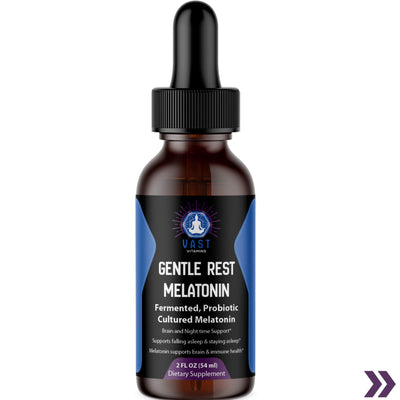
Is ashwagandha safe to take with melatonin?
There are no known dangerous interactions between ashwagandha and melatonin. However, combining two sleep-supportive supplements may increase drowsiness. Start with one and assess how you respond before adding the other. If you take prescription sleep medications (benzodiazepines, zolpidem), consult your doctor before adding ashwagandha.
Can ashwagandha help with insomnia?
Yes — the clinical evidence for ashwagandha is strongest in insomnia populations. A 2020 RCT in people with diagnosed insomnia found significant improvements in sleep onset latency, total sleep time, sleep efficiency, and overall sleep quality after 10 weeks on 600 mg/day.
A 2021 meta-analysis of 5 RCTs confirmed that effects are more pronounced in insomnia populations than in healthy sleepers.
Does ashwagandha help with stress-related sleep problems?
Yes. Stress-driven sleep disruption — difficulty falling asleep due to racing thoughts or elevated cortisol — is the primary target mechanism. Ashwagandha reduces cortisol by 22–28% versus placebo in chronically stressed adults. Since elevated evening cortisol is a major driver of delayed sleep onset and fragmented sleep, this is the mechanism most likely to explain its sleep benefits.
Who should NOT take ashwagandha for sleep?
Pregnant women should not take ashwagandha — this is a firm contraindication across all use cases. People on sedative medications (benzodiazepines, zolpidem, or other sleep drugs) should consult their doctor before combining. Those with autoimmune conditions (lupus, RA, MS) or active thyroid disorders should also check with their physician. Always consult a healthcare provider before starting any new supplement.
These statements have not been evaluated by the Food and Drug Administration. This product is not intended to diagnose, treat, cure, or prevent any disease. Consult your healthcare provider before starting any new supplement, especially if you are pregnant, nursing, taking medications, or have a medical condition.
References
- Langade D, et al. (2020). Efficacy and Safety of Ashwagandha (Withania somnifera) Root Extract in Insomnia and Anxiety: A Double-blind, Randomized, Placebo-controlled Study. Cureus. PMID: 32818573
- Cheah KL, et al. (2021). Effect of Ashwagandha (Withania somnifera) extract on sleep: A systematic review and meta-analysis. PLOS ONE. PMC8462692
- Kaushik MK, et al. (2017). Triethylene glycol, an active component of Ashwagandha (Withania somnifera) leaves, is responsible for sleep induction. PLOS ONE. PMC5313221
- Chandrasekhar K, et al. (2012). A Prospective, Randomized Double-Blind, Placebo-Controlled Study of Safety and Efficacy of a High-Concentration Full-Spectrum Extract of Ashwagandha Root in Reducing Stress and Anxiety in Adults. Indian Journal of Psychological Medicine. PMC3573577
- Choudhary D, et al. (2017). Body Weight Management in Adults Under Chronic Stress Through Treatment With Ashwagandha Root Extract: A Double-Blind, Randomized, Placebo-Controlled Trial. Journal of Evidence-Based Complementary and Alternative Medicine. PMC6750292
- National Institutes of Health Office of Dietary Supplements. Ashwagandha: Fact Sheet for Health Professionals. ods.od.nih.gov
About the Author
This article was written and reviewed by the Vast Vitamins content team. Our health content is researched against peer-reviewed clinical studies and reviewed for YMYL compliance before publication. We cite primary sources wherever possible and update articles when new evidence becomes available.