

















10 Signs of Sleep Deprivation (And What to Do About Each One)

Key Facts
- Adults need 7–9 hours of sleep per night — consistently sleeping less is clinically defined as sleep deprivation
- The most commonly missed signs are not tiredness but mood changes, memory lapses, and increased appetite
- Most mild-to-moderate sleep deprivation is reversible — better sleep habits and targeted nutritional support can help within days to weeks
About 1 in 3 U.S. adults regularly gets less than 7 hours of sleep per night, according to CDC data. You already know something feels off — the question is whether sleep deprivation is actually driving it. The 10 signs of sleep deprivation below are how you find out.
If you recognise four or more consistently in your daily life, you are almost certainly chronically sleep-deprived — and the good news is that most of it is reversible.
What Is Sleep Deprivation?
Sleep deprivation means regularly getting less sleep than your body needs — clinically defined as fewer than 7 hours per night for adults, per the American Academy of Sleep Medicine and Sleep Research Society joint consensus statement. Most adults need 7–9 hours; anything consistently below 7 constitutes sleep deprivation.
It is different from insomnia. Sleep deprivation means not allowing enough time for sleep — the person scrolling their phone until 1am and waking at 6am is sleep-deprived. Insomnia means being unable to sleep even when time is available — lying awake for two hours despite genuinely trying. These often coexist but have distinct causes and different solutions.
Even partial sleep deprivation accumulates as "sleep debt." Consistently sleeping 6 hours instead of 8 may feel manageable, but research shows measurable cognitive deficits pile up night after night, producing outcomes equivalent to complete sleep deprivation. The Sleep Foundation notes that most people dramatically underestimate how impaired they have become.
10 Signs of Sleep Deprivation

These signs of sleep deprivation range from obvious to surprisingly easy to dismiss. They are ordered roughly from most-commonly-noticed to least-expected. If you recognise four or more consistently in your daily life, you are likely chronically sleep-deprived.
Evidence rating key: ★★★ = multiple high-quality RCTs with consistent results | ★★☆ = solid evidence with some caveats | ★☆☆ = emerging evidence, shows promise but needs more research
1. Daytime Fatigue and Microsleeps ★★★
The most universal and diagnostic sign. If you feel sleepy during a genuinely engaging activity — not just a boring meeting — that is a clinically significant warning signal.
As wakefulness extends, adenosine (a sleep-pressure chemical) accumulates in the brain. Sleep is when adenosine clears. Inadequate sleep leaves clearance incomplete, producing the persistent fatigue that follows you through the day regardless of caffeine.
What many people miss: microsleeps. These are brief, involuntary sleep episodes lasting 1–30 seconds. Most people do not realise they have had one. They occur without warning — including while driving. Per the National Heart, Lung, and Blood Institute, microsleeps are a documented mechanism behind drowsy driving incidents.
2. Difficulty Concentrating and Slower Reaction Times ★★★
Working memory, sustained attention, and processing speed are the first cognitive functions to degrade under sleep deprivation — and they degrade quickly.
A finding that surprises most people: partial sleep deprivation (just 6 hours per night for two weeks) produces cognitive deficits equivalent to 24 hours of total sleep loss. Critically, sleep-deprived people consistently underestimate how impaired they have become. A 2023 review (PMC10155483) confirmed these attentional and reaction-time effects across multiple study designs.
A 2025 umbrella review (PMC12116485) extended this evidence across diverse populations and methodologies. College students averaging 5.8 hours per night showed measurable decreases in memory recall and focus within two weeks.
3. Mood Changes — Irritability, Anxiety, and Emotional Reactivity ★★★
Sleep deprivation does not just make you tired — it fundamentally changes how you process emotion. Both total and partial sleep loss increase negative mood and emotional reactivity while reducing the prefrontal cortex's ability to regulate those emotions.
A 2024 PMC study (PMC12168795) confirmed that sleep loss amplifies amygdala responses to negative stimuli — the brain becomes more reactive and less able to self-regulate. This creates a documented bidirectional trap: poor sleep worsens anxiety, and anxiety worsens sleep.
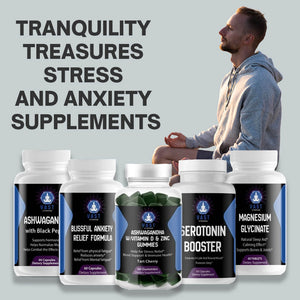
If persistent mood instability and anxiety are part of your picture, it is worth addressing both sides simultaneously. Our guide to anxiety supplements that may help when poor sleep is driving the cycle covers the supplemental options with the strongest research backing.
4. Memory Problems — Especially Short-Term Memory ★★★
Sleep is not downtime for the brain — it is when memory consolidation happens. During NREM sleep, the brain processes declarative memories (facts, names, events). During REM sleep, it handles procedural and emotional memories.
Practical signs: struggling to recall names of people you just met, misplacing objects multiple times a day, forgetting what you read minutes ago. Sleep-deprived people are also measurably more susceptible to false memories — confidently "remembering" events that did not happen.
The same 2023 cognitive consequences study (PMC10155483) found these memory deficits appear consistently across both acute and chronic partial sleep deprivation.
5. Increased Appetite and Cravings for High-Calorie Foods ★★☆
This is not a vague "feeling off" — it is a concrete, measurable hormonal disruption. Sleep deprivation raises ghrelin (the hunger hormone) and suppresses leptin (the satiety hormone). Research shows sleep-deprived adults consume an average of 300–500 extra calories per day as a direct result.
It is not willpower. It is biochemistry. And the cravings are specifically for high-calorie, high-carbohydrate, energy-dense foods — the brain hunting for quick fuel to compensate for its reduced energy state. Per the NHLBI, these hormonal shifts are detectable within a single night of restricted sleep.
6. Weakened Immune Function ★★★
Sleep is when the body produces cytokines — the immune signalling proteins that coordinate defences against infection, inflammation, and cellular stress. Without adequate sleep, cytokine production drops sharply.
In a controlled Carnegie Mellon trial, researchers exposed healthy volunteers to rhinovirus (the common cold) and tracked outcomes by sleep duration. People sleeping fewer than 7 hours were 3 times more likely to develop a cold than those sleeping 8+ hours — one of the most direct demonstrations of sleep's immune role in the literature (Prather et al., 2015).
Chronic sleep deprivation also measurably reduces antibody production following vaccination.
7. Impaired Glucose Metabolism and Weight Gain Risk ★★☆
Sleep deprivation impairs insulin sensitivity and glucose metabolism within days — not weeks. Measurable changes in blood sugar regulation appear after just a few nights of restricted sleep.
Chronically sleep-deprived adults have significantly higher rates of Type 2 diabetes. Combined with the ghrelin/leptin disruption in sign 5, sleep deprivation creates a metabolic environment predisposed to weight gain through two independent pathways simultaneously: more calories consumed, and poorer glucose handling of those calories.
This explains why "just trying harder to eat well" is an uphill battle if you are chronically under-slept. The NHLBI identifies metabolic impairment as one of the most well-established long-term risks of chronic sleep deprivation.
8. Physical Appearance Changes ★★☆
Objective and measurable — not vanity. Research confirms that even a few nights of poor sleep produces visible changes: increased redness and puffiness around the eyes, dark circles, fine lines, and reduced skin elasticity.
The mechanism: chronic sleep deprivation elevates cortisol, which degrades collagen — the structural protein that keeps skin firm. A study by Oyetakin-White et al., published in Clinical and Experimental Dermatology, found that poor-quality sleepers showed significantly greater signs of intrinsic skin ageing compared to good sleepers of the same age.
This sign is particularly useful for connecting abstract "sleep deprivation" to something readers can literally see each morning — making the sleep–health relationship concrete and motivating.
9. Impaired Decision-Making and Increased Risk-Taking ★★★
Prefrontal cortex function — responsible for judgment, planning, impulse control, and risk assessment — degrades significantly with sleep loss. The result is measurably more impulsive risk-taking and poorer decisions, confirmed by the 2024 affective processes review (PMC12168795).
The most dangerous aspect of this sign: sleep-deprived people consistently rate their own performance as nearly normal while objective measures show significant degradation. The impairment is self-concealing.
Real-world stakes: the National Highway Traffic Safety Administration reports approximately 91,000 police-reported drowsy driving crashes per year in the U.S. — and those are only the crashes that were reported.
10. Reduced Sex Drive ★★☆
Testosterone and estrogen production occur primarily during sleep — specifically during slow-wave and REM stages. Chronic sleep loss measurably suppresses both hormones in both men and women.
This is a frequently overlooked sign of sleep deprivation, partly because it feels unrelated to "tiredness." But it represents a concrete systemic hormonal disruption. Low libido without an obvious cause is worth examining alongside sleep quality — particularly when other signs on this list are also present.
Per Sleep Foundation research on hormones and sleep, even one week of sleeping 5 hours per night can significantly suppress testosterone levels in healthy young men — an effect comparable to ageing 10–15 years in hormonal terms.
What Causes Sleep Deprivation?
Identifying your personal root cause matters, because different causes require different solutions. The most common drivers include:
- Work schedules and shift work — the most prevalent structural cause for adults. Shift work directly disrupts circadian rhythm, forcing sleep at biologically wrong times.
- Chronic stress and anxiety — a bidirectional relationship: stress makes falling asleep harder, poor sleep amplifies stress sensitivity. This cycle is one of the hardest patterns to break without directly addressing both sides.
- Evening screen exposure — blue-spectrum light from phones, tablets, and laptops suppresses melatonin production and maintains the brain in an alert state at the exact time it needs to wind down.
- Undiagnosed sleep apnea — 80–90% of moderate-to-severe sleep apnea cases go undetected. If you snore loudly, wake consistently unrefreshed even after 8+ hours, or have been told you gasp during sleep, this is a clinical priority.
- Caffeine timing — caffeine has a 5–6 hour half-life. A 3pm coffee still has half its caffeine active at 8pm. Many people inadvertently disrupt their sleep architecture nightly without connecting it to their afternoon habits.
- Alcohol — aids sleep onset but suppresses REM sleep and increases awakenings in the second half of the night, when restorative sleep should be deepest.
- Caregiving responsibilities — new parents and caregivers of elderly or chronically ill family members face structural sleep loss that requires active management strategies, not willpower alone.
For a comprehensive look at evidence-based solutions for each of these causes, see our guide to natural insomnia treatments that address these root causes in depth.
How Sleep Deprivation Affects Your Body Over Time

These are not distant theoretical risks — they are documented outcomes of the chronic partial sleep deprivation that is extremely common across the adult population.
- Cardiovascular: significantly increased risk of hypertension, high cholesterol, and coronary heart disease. The 2025 umbrella review (PMC12116485) confirmed these cardiovascular associations across diverse study designs and populations.
- Metabolic: higher rates of Type 2 diabetes and obesity, compounding the hormonal disruptions covered in the signs section above. The NHLBI identifies metabolic impairment among the most well-established long-term consequences.
- Mental health: sleep deprivation is both a symptom and a cause of anxiety and depression. Addressing both sides simultaneously is more effective than addressing either alone — see our guide to anxiety supplements that may help when anxiety is disrupting sleep.
- Cognitive decline (★☆☆ emerging evidence): emerging research suggests chronic sleep deprivation may accelerate beta-amyloid accumulation — a precursor to Alzheimer's disease. The mechanism is plausible: sleep is when the glymphatic system clears metabolic waste from the brain. More research is needed to establish this as clinical fact.
- Safety: drowsy driving causes approximately 91,000 U.S. crashes per year per NHTSA data.
Natural Ways to Support Better Sleep
Here is what you can do starting tonight — from immediate adjustments through longer-term nutritional support.
Sleep Hygiene Fundamentals

These five practices are the most evidence-backed adjustments you can make. No supplements or prescriptions required — just consistent implementation:
- Consistent sleep and wake times every day, including weekends. Irregular timing confuses the circadian clock and prevents deep-sleep consolidation. Weekend "sleep binging" does not reverse weekday deprivation.
- Keep your bedroom cool (65–68°F / 18–20°C), dark, and quiet. The body drops core temperature as part of sleep initiation; a warm room actively fights this process.
- No screens 60 minutes before bed. Blue-spectrum light suppresses melatonin production at precisely the time your body needs to ramp it up.
- No caffeine after 2pm. With a 5–6 hour half-life, a 3pm coffee still has half its stimulant effect active at 8pm.
- No alcohol within 3 hours of bed. Alcohol speeds sleep onset but fragments sleep architecture — suppressing REM sleep and causing more awakenings in the second half of the night when restorative sleep should be deepest.
Exercise and Diet
Regular aerobic exercise meaningfully improves both sleep quality and duration — with some research comparing the effect size to pharmacological sleep aids. Even 30 minutes of moderate activity most days produces measurable improvements in sleep architecture.
What you eat — and when — matters too. Tryptophan-rich foods paired with complex carbohydrates support the dietary pathway to melatonin production. A balanced diet rich in magnesium, B vitamins, and omega-3s provides the raw materials your body needs to produce sleep-regulating hormones.
Natural Sleep Supplements — What the Evidence Shows

Several supplements have genuine clinical evidence for supporting sleep. These are facilitators of healthy sleep architecture, not substitutes for addressing root causes.
Melatonin is the most well-studied sleep supplement, most effective for sleep onset difficulty — falling asleep — rather than sleep maintenance. A 2024 dose-response meta-analysis by Cruz-Sanabria et al. in the Journal of Pineal Research confirmed effectiveness across 0.5–5mg, with lower doses often as effective as higher ones.
Take 30–60 minutes before your target sleep time. Melatonin supports the transition to sleep — it does not replace the biological need for adequate total sleep time.
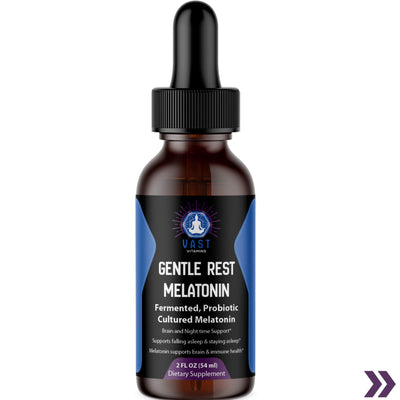
For precise, adjustable dosing — particularly useful when finding your optimal personal melatonin level — Gentle Rest Melatonin liquid drops allow you to dial in your exact dose without being locked into a fixed-dose tablet.
Magnesium glycinate supports the NMDA receptor and GABA system — the brain's primary calming pathway. Glycinate chelate has better bioavailability than oxide or citrate for nervous system support. A 2023 double-blind crossover trial (Medical Research Archives) showed significant improvements in sleep time and efficiency in adults with poor sleep quality.
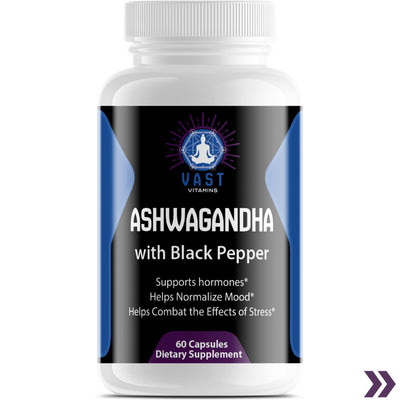
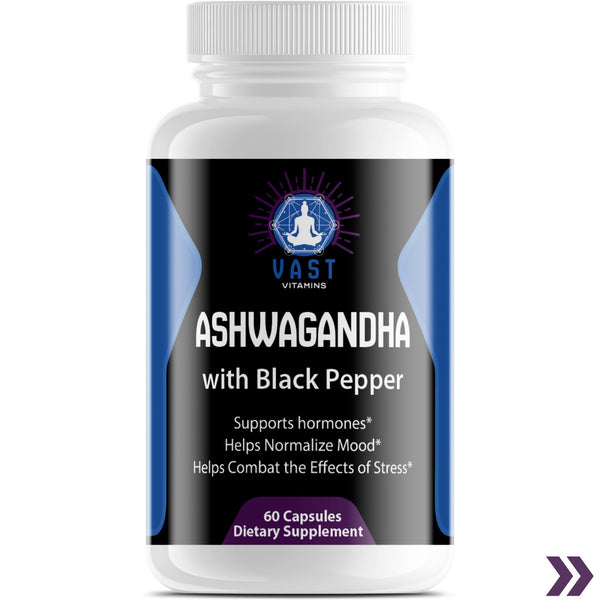
Ashwagandha is an adaptogen that reduces cortisol — relevant because elevated cortisol at bedtime is a primary driver of sleep onset difficulty. If stress and high arousal before bed are your pattern, ashwagandha addresses the hormonal root. See our full evidence review: ashwagandha's sleep and relaxation benefits.
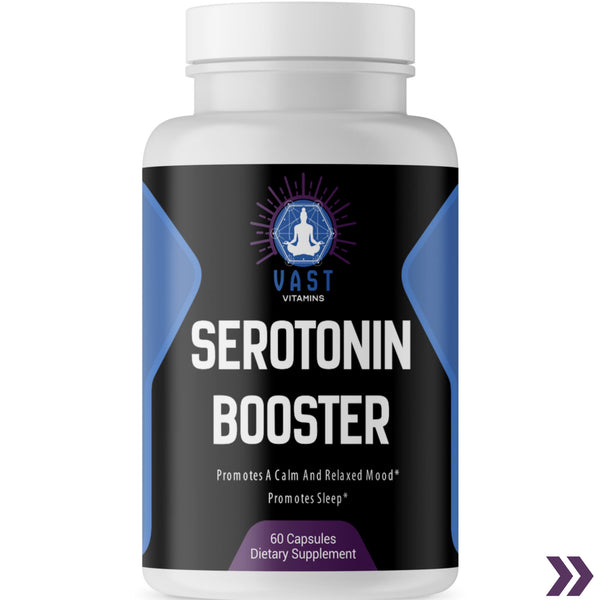
L-Theanine (100–200mg) promotes alpha brainwave activity and GABA production without sedation — the "relaxed but alert" state. A 2025 meta-analysis of 19 trials found significant improvements in sleep onset latency and overall sleep quality. Particularly useful for anxiety-driven racing thoughts. For the connection between serotonin and sleep quality, see how serotonin affects sleep quality.
Try Vast Vitamins Sleep Support
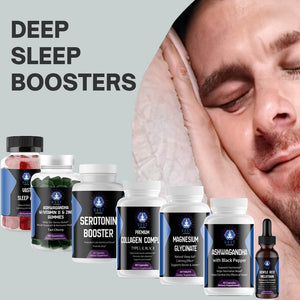
If poor sleep is affecting your mood, focus, and energy, our sleep support range may help. Vast Sleep Aid Gummies offer a convenient nightly gummy format, while Gentle Rest Melatonin liquid drops let you dial in your exact dose — particularly useful when finding your optimal melatonin level.
Shop Vast Sleep Aid Gummies → | Shop Gentle Rest Melatonin Drops →
When to See a Doctor

Knowing when to escalate is the sign of someone taking their health seriously. Most sleep deprivation responds to the approaches above — but these situations warrant professional evaluation:
- You suspect sleep apnea — loud snoring, gasping during sleep, or waking consistently unrefreshed even after 8+ hours. Sleep apnea is seriously underdiagnosed: 80–90% of moderate-to-severe cases go undetected. It is a treatable medical condition, not a lifestyle issue.
- Sleep problems have persisted for more than 3 months — the clinical threshold for chronic insomnia. Cognitive-behavioural therapy for insomnia (CBT-I) has the strongest long-term evidence of any insomnia treatment and is available without medication.
- Daytime sleepiness is severe enough to impair driving, work performance, or relationships — functional impairment at this level needs clinical assessment, not self-management alone.
- You have experienced hallucinations, extreme mood disturbances, or a microsleep while driving — these require immediate medical attention.
- You have underlying conditions — diabetes, hypertension, depression — that appear to be worsening — sleep deprivation can accelerate all of these, and a doctor should assess the relationship.
- Sleep supplements have not improved sleep after 4–6 weeks of consistent use — this is a signal to rule out a medical cause before continuing to self-manage.
Frequently Asked Questions
How many hours of sleep do adults actually need?
Most adults need 7–9 hours of sleep per night. The American Academy of Sleep Medicine and Sleep Research Society joint consensus statement defines fewer than 7 hours as insufficient for adults aged 18–60; adults over 60 generally need 7–8 hours.
Individual variation exists — consistently feeling well-rested with 7 hours is likely fine. The number to watch is how you function, not just how long you slept.
Can you catch up on lost sleep over the weekend?
Partially — but only for short-term, acute sleep debt, not chronic deprivation. Research shows the cognitive impairment from consistently sleeping 6 hours per night for two or more weeks cannot be fully reversed by a single recovery weekend.
You can recover some acute fatigue, but the performance deficits from chronic partial sleep deprivation require weeks of consistent adequate sleep, not a two-day binge. The near-universal belief that a long Saturday cancels a week of short nights is not supported by the evidence.
How quickly do the signs of sleep deprivation appear?
Measurable cognitive impairment begins within 17–19 hours of continuous wakefulness. Mood changes typically appear after just one or two nights of insufficient sleep. Hormonal disruptions — including the ghrelin/leptin shifts that drive increased appetite — are detectable within a single night of restricted sleep.
Most people notice changes within 24–48 hours of poor sleep, even if they attribute them to other causes.
Does melatonin actually help with sleep deprivation?
Yes, with an important caveat: melatonin is most effective for sleep onset difficulty — falling asleep — rather than sleep maintenance or reversing the effects of sleep deprivation itself. A 2024 dose-response meta-analysis (Cruz-Sanabria et al., Journal of Pineal Research) confirmed effectiveness at 0.5–5mg, with smaller doses often performing as well as larger ones.
Melatonin can help you fall asleep faster, but the only solution to sleep deprivation is consistently adequate total sleep time.
Can sleep deprivation cause anxiety?
Yes — and the relationship runs in both directions. Sleep deprivation activates the amygdala and impairs the prefrontal cortex's ability to regulate emotional responses, directly increasing anxiety and reactivity. A 2024 PMC review (PMC12168795) confirmed these bidirectional affective effects.
Poor sleep worsens anxiety; anxiety worsens sleep — a cycle that can become self-sustaining. See our guide to evidence-based anxiety supplements for options that may help break the cycle.
What is the difference between sleep deprivation and insomnia?
Sleep deprivation means not allowing enough time for sleep — a behavioural or circumstantial issue. The person scrolling until 1am and waking at 6am is sleep-deprived by choice or circumstance. Insomnia means being unable to sleep even when time is available — lying awake for two hours despite genuinely trying.
These often coexist but require different approaches: sleep deprivation is primarily resolved by protecting sleep time, while insomnia requires identifying and addressing the underlying driver of the wakefulness.
Can supplements replace sleep?
No. No supplement replaces the biological requirement for sleep. Melatonin, magnesium, ashwagandha, and L-theanine may support the transition to sleep and improve sleep quality, but they cannot replicate the neurological repair, memory consolidation, immune maintenance, and hormonal production that happen only during actual sleep.
These supplements are facilitators of better sleep — not substitutes for it. The only solution to sleep deprivation is consistently adequate total sleep time.
These statements have not been evaluated by the FDA. This product is not intended to diagnose, treat, cure, or prevent any disease. Always consult a qualified healthcare provider before starting any new supplement, especially if you have underlying health conditions or take medications.
References
- CDC — Adults Sleep Facts and Statistics. Centers for Disease Control and Prevention.
- AASM/SRS Joint Consensus Statement — Seven or More Hours of Sleep Per Night: A Health Necessity for Adults. American Academy of Sleep Medicine, 2015.
- Sleep Foundation — Sleep Deprivation: Causes, Symptoms, and Treatment.
- NHLBI — Sleep Deprivation and Deficiency: Health Effects. National Heart, Lung, and Blood Institute.
- PMC10155483 — Cognitive Consequences of Sleep Deprivation (2023). PubMed Central.
- PMC12116485 — Effects of Sleep Deprivation: Umbrella Review (2025). PubMed Central.
- PMC12168795 — Role of Sleep Loss on Affective and Behavioral Processes (2024). PubMed Central.
- Prather AA et al. — Behaviorally Assessed Sleep and Susceptibility to the Common Cold (2015). Sleep.
- Cruz-Sanabria et al. — Melatonin Dose-Response Meta-Analysis (2024). Journal of Pineal Research.
- NHTSA — Drowsy Driving Statistics. National Highway Traffic Safety Administration.