

















Vitamin B12 Benefits: What the Science Actually Says

Key Takeaways
- B12 is essential for nerve function, red blood cell formation, and DNA synthesis — these are basic physiology, not marketing claims.
- The energy claim needs clarification: supplementing B12 only improves energy if you are deficient. In people with adequate levels, there is no documented energy boost.
- Common medications deplete B12: metformin and proton pump inhibitors significantly reduce B12 absorption. If you take these drugs, B12 monitoring is clinically recommended.
Vitamin B12 is one of the most frequently cited supplements for energy — but the evidence behind that claim is more nuanced than most articles admit. B12 does several remarkable things in the body, and the benefits that are well-supported by research are genuinely important. This guide covers how vitamin B12 works at a foundational level, which benefits have strong evidence, who is most at risk of deficiency, and what the science actually says about energy.
What Is Vitamin B12?
Vitamin B12, also called cobalamin, is a water-soluble vitamin that the body cannot produce on its own. It must come from food or supplements.
B12 is found naturally in animal products — meat, fish, shellfish, dairy, and eggs. It is essentially absent from unfortified plant foods, which is why vegans face a higher deficiency risk.
What makes B12 absorption unusual is that it requires a protein called intrinsic factor, secreted by the stomach lining, to bind the vitamin and transport it to the small intestine for uptake. This step can fail for several reasons — age-related decline in stomach acid, certain medications, or an autoimmune condition called pernicious anemia.
Supplements — especially high-dose or liquid sublingual forms — can partially bypass this barrier via passive diffusion, which is why they are effective even when intrinsic factor is compromised.
Proven Benefits of Vitamin B12

B12 has several well-documented roles in human health, though the quality of evidence varies by benefit. Ratings below reflect the strength and consistency of current clinical research.
Evidence rating key: ★★★ = multiple high-quality RCTs with consistent results | ★★☆ = solid evidence with some caveats | ★☆☆ = emerging evidence, shows promise but needs more research
Nerve Health and Function ★★★ (Strong Evidence)
B12 is required to maintain the myelin sheath — the protective coating that surrounds nerve fibres and allows electrical signals to travel efficiently.
When B12 is deficient, myelin breaks down progressively. The result is neurological damage: numbness, tingling, weakness, and balance problems. A 2021 review in PMC (PMC8294980) confirmed that B-group vitamins — particularly B12 — are directly involved in remyelination and nerve regeneration.
This is one of B12's most critical roles. Neurological damage from prolonged deficiency can be irreversible, which is why early diagnosis and treatment matter.
Red Blood Cell Formation ★★★ (Strong Evidence)
B12 is essential for producing healthy, functional red blood cells. Without it, cells grow large and malformed — a condition called megaloblastic anemia.
These oversized cells cannot carry oxygen efficiently. Symptoms include fatigue, weakness, shortness of breath, and pale or yellowish skin. This is the most well-established B12 benefit in clinical medicine — it underpins why B12 is monitored in populations at risk of deficiency.
The NIH Office of Dietary Supplements identifies megaloblastic anemia as a primary clinical consequence of B12 insufficiency.
DNA Synthesis ★★★ (Strong Evidence)
B12 acts as a cofactor in DNA synthesis, working alongside folate. Both vitamins are required for cell division — which is why deficiency in either disrupts the production of rapidly dividing cells (red blood cells, intestinal cells) first.
This B12 role is especially critical during pregnancy and early development. Adequate B12 status is important for fetal development alongside folate, as both are required for normal neural tube formation and DNA replication.
Mood and Depression Risk ★★☆ (Moderate Evidence)
Low B12 is consistently linked to higher rates of depressive symptoms, particularly in older adults. A 2021 systematic review and meta-analysis (PubMed 33809274) found that B12 supplementation was associated with modest improvements in depressive symptoms — primarily in deficient populations.
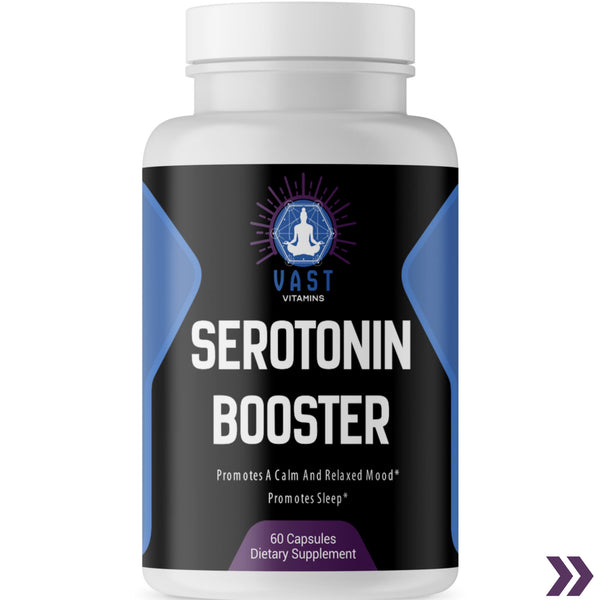
The mechanism is biologically plausible. B12 is involved in the synthesis of serotonin and dopamine, the neurotransmitters most closely linked to mood regulation. Read more about how to increase serotonin naturally through diet and lifestyle.
The honest caveat: supplementing B12 in people who are not deficient does not demonstrably improve mood. The benefit appears to be corrective, not additive.
Cognitive Health and Memory ★★☆ (Moderate Evidence)
B12 deficiency is linked to cognitive decline and increased dementia risk, particularly in older adults. One mechanism is through homocysteine — an amino acid that rises when B12 is low.
Elevated homocysteine is independently associated with cardiovascular disease and neurological deterioration. B12 (along with folate and B6) converts homocysteine back to methionine, reducing this risk marker. The same 2021 systematic review (PubMed 33809274) identified cognitive function as an area where B12 supplementation showed benefit, mainly in those with low or borderline-low levels.
Worth noting: supplementing B12 in people with already-normal levels has not been shown to enhance memory or sharpen cognition beyond baseline.
Eye Health and Macular Degeneration ★★☆ (Moderate Evidence)
Elevated homocysteine is also a recognised risk factor for age-related macular degeneration (AMD) — the leading cause of vision loss in adults over 50.
A well-cited trial by Christen et al. (2009) followed more than 5,000 women aged 40 and over for seven years. The group taking B12 combined with B6 and folic acid had 34% fewer AMD cases compared to placebo.
The caveat: this was a combined supplement trial. Isolating the specific contribution of B12 is difficult. The homocysteine-lowering mechanism is, however, biologically plausible and consistent with other cardiovascular evidence.
Bone Health ★★☆ (Moderate Evidence)
Multiple observational studies have linked low B12 levels to lower bone mineral density and higher fracture risk.
The likely mechanism is homocysteine again — elevated levels interfere with collagen cross-linking in bone matrix, weakening its structural integrity. B12's role in keeping homocysteine in check may therefore support bone maintenance over time.
Supplementation evidence in people with already-normal B12 levels is modest. As with mood and cognition, the benefit is most clearly seen in correcting deficiency.
Energy and Fatigue ★★☆ (Moderate Evidence — with an Important Caveat)
This is the most misrepresented benefit in supplement marketing. Here is what the evidence actually shows:
- If you are B12 deficient, correcting that deficiency reliably reduces fatigue and improves energy. Megaloblastic anemia impairs oxygen delivery; fixing it makes a real difference.
- If you are not deficient, B12 supplementation does not increase energy. No high-quality RCT has documented an energy boost in people with adequate B12 levels.
B12's role in energy is real but easily misunderstood. It acts as a cofactor in converting food into cellular energy (through the mitochondrial pathway), but this is a maintenance function — not a performance-enhancement effect. The NIH and WebMD both state this clearly.
For a detailed exploration of this topic — including why the myth persists and what the full evidence shows — read our dedicated article on vitamin B12 and energy.
Who Is Most at Risk of B12 Deficiency?

B12 deficiency is more widespread than most people realise. The Cleveland Clinic estimates that up to 43% of older adults have insufficient B12 levels. Several groups face elevated risk:
- Vegans and vegetarians: B12 is absent from plant foods. Supplementation is essentially mandatory for anyone following a plant-based diet long term.
- Adults over 50: Stomach acid declines with age, reducing the release of B12 from food and impairing intrinsic factor function. Absorption efficiency falls significantly.
- People with pernicious anemia: An autoimmune condition where the body attacks the cells that produce intrinsic factor. These individuals cannot absorb food-bound B12 at all and require injections or very high-dose supplements.
- People with digestive conditions: Crohn's disease, celiac disease, and atrophic gastritis all impair B12 absorption in different ways.
Drug Interactions That Deplete B12

This section is absent from nearly every supplement brand blog — but it matters for YMYL health decision-making.
Important: If you take any of the medications below, discuss B12 monitoring with your healthcare provider. Deficiency may develop slowly and without obvious symptoms.
- Metformin (diabetes medication): Interferes with B12 uptake in the ileum. Research suggests up to 50% of long-term metformin users become deficient. The UK Medicines and Healthcare products Regulatory Agency (MHRA) now recommends B12 monitoring for all metformin users.
- Proton pump inhibitors (PPIs) — omeprazole, lansoprazole, esomeprazole: Reduce stomach acid production, which is needed to release B12 from food proteins.
- H2 blockers — ranitidine, cimetidine: Similar mechanism to PPIs; reduce stomach acid and impair B12 release.
- Combined metformin + PPI use: A 2025 study (PMC12562576) found that people taking both drugs had approximately 34% B12 deficiency prevalence — higher than either drug alone. An earlier 2018 study (PMC6054240) confirmed this interaction pattern.
- Chloramphenicol (antibiotic): May interfere with B12 utilisation at the cellular level.
For a detailed look at vitamin B12 deficiency symptoms and what to do if you think you may be deficient, see our article on vitamin B12 deficiency symptoms and treatment.
How Much Vitamin B12 Do You Need?

The NIH Office of Dietary Supplements sets the following recommended daily amounts:
| Group | Recommended Daily Amount |
|---|---|
| Adults (19+) | 2.4 mcg |
| Pregnant women | 2.6 mcg |
| Breastfeeding women | 2.8 mcg |
| Adults over 50 | 10–12 mcg (to compensate for reduced absorption) |
| Vegans / vegetarians | Supplement recommended — 25–100 mcg daily (higher doses overcome passive diffusion variability) |
There is no established upper intake limit for B12. Because it is water-soluble, excess is excreted in urine rather than stored. This makes B12 one of the safest vitamins to supplement at higher doses.
Therapeutic doses of 500–1,000 mcg daily are commonly used to correct confirmed deficiency, particularly in people with absorption issues. Very large doses partially bypass the intrinsic factor requirement via passive diffusion.
The richest food sources include: liver, clams, sardines, salmon, tuna, beef, dairy products, and eggs. Plant foods contain no B12 unless fortified.
For adults over 50 or anyone with absorption concerns, a sublingual liquid supplement can be a practical choice — our B12 liquid drops deliver cobalamin in a sublingual form that partially bypasses the intrinsic factor step. Combined with the broader energy supplement picture, addressing B12 status is often a logical first step for people experiencing persistent fatigue.
Supplement Forms: Cyanocobalamin vs. Methylcobalamin

Most B12 supplement labels list either cyanocobalamin or methylcobalamin. Here is what the difference actually means in practice.
- Cyanocobalamin: The synthetic form used in most supplements. Less expensive to manufacture. The body must convert it to the active forms (methylcobalamin and adenosylcobalamin) before it can be used. Studies suggest it achieves slightly higher short-term blood levels.
- Methylcobalamin: The naturally occurring, bioactive form found in animal foods. Ready to use without conversion. A comparison study (PMC8311243) in vegans found cyanocobalamin achieved a higher median holotranscobalamin (an active B12 biomarker) — but methylcobalamin may have higher tissue retention long term.
Bottom line for most people: both forms effectively correct deficiency. The practical difference is modest. Neither form is clearly superior for the general population.
A third consideration is sublingual delivery. Liquid drops held under the tongue allow partial absorption directly through the oral mucosa, bypassing the digestive tract entirely. A 2025 meta-analysis in Frontiers in Pharmacology found sublingual B12 comparable to intramuscular injection for treating deficiency — a meaningful finding for people who have difficulty with standard oral absorption.
Safety and Side Effects
Vitamin B12 has no established tolerable upper intake level and is considered safe at high doses for most adults.
- Water-soluble: Excess is excreted in urine, not stored in fat tissue — the main reason high doses are not associated with toxicity.
- Side effects: Rare, and typically mild when they occur — nausea, headache, or diarrhea at very high doses.
- Important exception — Leber's disease: People with Leber's hereditary optic neuropathy should not use cyanocobalamin. The cyanide moiety may worsen this genetic condition. Methylcobalamin or adenosylcobalamin are the appropriate alternatives.
- High-dose injections long term: Periodic B12 monitoring is recommended for people receiving therapeutic injections over extended periods.
For healthy adults taking a standard supplement dose, B12 is among the safest vitamins available. As always, consult your healthcare provider before starting any supplement, particularly if you have a pre-existing condition or take prescription medications.
Try Vast Vitamins Energy Booster Plus B12 Drops
Our B12 liquid drops deliver cobalamin in sublingual form, bypassing the intrinsic factor step — making them an option worth considering for adults over 50, vegans, or anyone with absorption concerns who wants to support healthy nerve function and red blood cell formation.
Frequently Asked Questions
Does vitamin B12 give you energy?
B12 supports energy metabolism, but only improves fatigue in people who are deficient. If your B12 levels are already adequate, supplementing will not increase your energy levels — no high-quality RCT has demonstrated a meaningful energy effect in non-deficient individuals. The NIH and WebMD both confirm this. B12's role is a baseline requirement for cellular energy production, not a performance enhancer.
What are the signs of vitamin B12 deficiency?
Common signs include fatigue, weakness, numbness or tingling in the hands and feet, memory problems, mood changes, and pale or yellowish skin. Neurological symptoms — like balance problems and nerve pain — can occur even without anemia. See our full guide on vitamin B12 deficiency symptoms and treatment for a complete list and guidance on testing.
How long does it take for B12 supplements to work?
Blood B12 levels typically improve within 4–8 weeks of consistent supplementation. Neurological symptoms can take several months to fully resolve, and in cases of prolonged deficiency, recovery may be partial. Blood cell parameters generally normalise within 6–8 weeks of correcting the deficiency.
Can you take too much vitamin B12?
Vitamin B12 has no established tolerable upper intake level. Because it is water-soluble, excess is excreted in urine rather than stored. High doses are generally considered safe for most people, and no adverse effects have been consistently observed even at doses many times higher than the RDA. The exception is people with Leber's disease — see the Safety section above.
What is the difference between methylcobalamin and cyanocobalamin?
Cyanocobalamin is the synthetic form used in most supplements and must be converted by the body to its active forms. Methylcobalamin is the naturally occurring, bioactive form. Both are effective at correcting deficiency. A 2025 Frontiers in Pharmacology meta-analysis found both forms significantly raise blood B12 levels, with sublingual delivery comparable to intramuscular injection.
Who needs a vitamin B12 supplement?
People most likely to benefit include: vegans and vegetarians (B12 is absent from plant foods), adults over 50 (absorption declines with age), people taking metformin or proton pump inhibitors long term, and those with pernicious anemia or digestive conditions affecting absorption. According to Harvard Health, all adults over 50 should consider a B12 supplement or fortified foods.
Does B12 interact with any medications?
Yes. Metformin (a common diabetes medication) and proton pump inhibitors (such as omeprazole) can significantly reduce B12 absorption over time. People taking these medications long term should have their B12 levels monitored. A 2025 study found that combined use of both drugs raises deficiency prevalence to approximately 34%. Always consult your doctor if you take either medication and are concerned about B12 status.
These statements have not been evaluated by the FDA. This product is not intended to diagnose, treat, cure, or prevent any disease. Always consult a qualified healthcare provider before starting any supplement, particularly if you have a medical condition, are pregnant or breastfeeding, or take prescription medications.
Sources
- NIH Office of Dietary Supplements — Vitamin B12 Consumer Fact Sheet
- NIH Office of Dietary Supplements — Vitamin B12 Health Professional Fact Sheet
- PubMed 33809274 — Systematic review: B12, cognitive function, depression, and fatigue (2021)
- PMC8294980 — Neurotropic B vitamins and nerve regeneration (2021)
- PMC6054240 — Metformin, PPIs, and B12 deficiency interactions (2018)
- PMC12562576 — B12 deficiency with combined metformin and PPI use (2025)
- Frontiers in Pharmacology 2025 — Sublingual vs. oral vs. intramuscular B12 meta-analysis
- PMC8311243 — Methylcobalamin vs. cyanocobalamin in vegans
- Harvard Health — Should you take a vitamin B12 supplement?