















Acai Berry Benefits: What the Science Actually Says

Acai berries have been marketed as a weight-loss miracle and a "full body detox" superfood for two decades. The real story is both more interesting and more honest than the hype: acai is a genuinely exceptional source of antioxidants, dietary fiber, and plant sterols — but it is not a fat-burning detox agent. Here is what the research actually shows.
Key Takeaways
- Acai's ORAC antioxidant score is 15,405 per 100g — more than three times higher than blueberries
- The strongest clinical evidence supports antioxidant activity and cardiovascular support; weight-loss claims are not supported by peer-reviewed research
- Supplement form matters: look for standardized extract in the 200–500 mg/day studied dose range; avoid products with unverified "detox" or "cleanse" marketing
What Are Acai Berries?
Acai berries (pronounced ah-sah-EE) are small, dark-purple fruits harvested from Euterpe oleracea, a palm tree native to the Amazon rainforest of Brazil and surrounding regions.
Unlike most berries, acai is higher in fat than sugar — its nutritional profile is closer to a small olive than a strawberry. This unusual composition makes it a dense source of calories and bioactive compounds even in small amounts.
The primary bioactive compounds in acai include:
- Anthocyanins — the dark-purple pigments responsible for most antioxidant activity
- Proanthocyanidins — a class of polyphenols with cardiovascular benefits
- Phytosterols — plant-based compounds that compete with dietary cholesterol for absorption
- Dietary fiber — approximately 3.8g per 100g of pulp
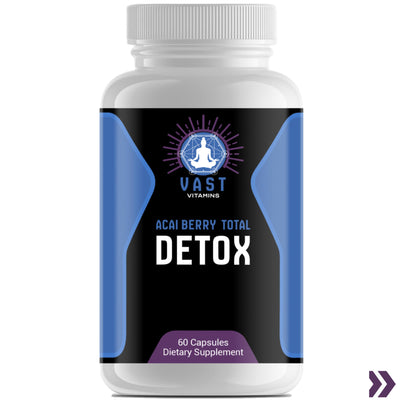
It is worth noting that "acai berry" as a raw food is very different from branded "acai berry detox" supplements. The fruit itself has a genuine and well-documented nutritional profile. Many commercial detox products combine acai with laxatives, stimulants, or fiber supplements — the effects attributed to "acai" in those products often come from the added ingredients. For more on what acai berry actually is as a supplement, see our product overview.
Acai Berry Nutrition Facts

Per 100g of frozen acai pulp — the form most commonly used in clinical studies — the nutritional breakdown is:
- Calories: ~75 kcal
- Fat: 5.4g (primarily oleic and palmitic acid)
- Carbohydrates: 5.4g (2g sugar)
- Fiber: 3.8g
- Protein: 1.1g
- Minerals: calcium, iron, magnesium, zinc
- Vitamins: A, C, E
- Amino acids: 19 identified
The standout figure is the ORAC score of 15,405 per 100g — a measure of antioxidant capacity. For comparison, blueberries score approximately 4,669 ORAC units per 100g. Acai also contains 10× more anthocyanins than red grapes, and 10–30× more than red wine, according to the 2023 critical review published in PMC (PMC9965320).
One important caveat: nutritional values vary significantly between juice, powder, freeze-dried, and frozen pulp forms. Processing (especially pasteurization and concentration) can reduce anthocyanin content substantially. When comparing products, freeze-dried powder and frozen pulp tend to retain the most bioactive compounds.
Proven Benefits of Acai Berry
Clinical evidence on acai is promising but still emerging. The majority of studies are preclinical — conducted in cell cultures or animal models. As of a comprehensive 2023 systematic review in PMC (PMC9965320), researchers identified 43 in vitro studies, 62 animal studies, and just 10 human clinical trials. Where human evidence exists, the results are generally positive — but the sample sizes are modest and replication is limited.
Evidence rating key: ★★★ = multiple high-quality RCTs with consistent results | ★★☆ = solid evidence with some caveats | ★☆☆ = emerging evidence, shows promise but needs more research
Antioxidant Protection ★★☆ (Moderate Evidence)
Acai is one of the most antioxidant-dense foods measured — and human studies confirm this translates into measurable reductions in oxidative stress biomarkers.
The primary antioxidant mechanism involves anthocyanins and polyphenols neutralizing free radicals and reducing markers of oxidative damage. The 2023 PMC review found a remarkably strong correlation (r = 0.978) between acai's antioxidant capacity and its total phenol content — meaning the antioxidant activity is directly tied to the concentration of these compounds.
In human subjects, consumption of acai reduced biomarkers of oxidative stress in overweight adults — one of the more consistent findings across the available clinical trials. The ★★☆ rating reflects genuinely strong preclinical evidence, supported by a modest but positive human trial base. The limiting factor is that only 10 human clinical trials exist in total — a small evidence foundation compared to more extensively studied antioxidants.
Heart and Cholesterol Support ★★☆ (Moderate Evidence)

Acai's cardiovascular benefits are driven primarily by its phytosterol content — plant-based compounds structurally similar to cholesterol that compete for absorption in the gut, effectively reducing the amount of dietary cholesterol that enters the bloodstream.
Animal studies have demonstrated reduced atherosclerosis and improved lipid profiles with acai supplementation. Human evidence is also positive: a 2020 study involving 69 overweight adults with dyslipidemia found that consuming 200g of acai daily for 60 days reduced oxidative stress markers and improved inflammatory biomarkers. A 2025 review of human acai studies further suggests reduced total lipid levels.
The ★★☆ rating reflects genuine cardiovascular signal in human subjects, with the honest caveat that dedicated LDL-reduction RCTs are still limited in number and scale.
Brain and Cognitive Health ★☆☆ (Emerging Evidence)
The neuroprotective potential of acai is scientifically interesting but largely preclinical. The mechanism is well-established: high antioxidant load protects neurons from oxidative damage, which plays a role in neurodegenerative conditions.
Laboratory studies suggest acai compounds may slow Parkinson's disease progression by reducing neuroinflammation and reducing dopamine loss, as noted by the Cleveland Clinic. A 2022 assessment published in MDPI explored acai's nutraceutical potential for Alzheimer's disease, identifying promising bioactive pathways.
The ★☆☆ rating is honest: no large human RCTs exist for cognitive outcomes. The preclinical signal is worth watching, but these benefits cannot yet be claimed with confidence for human supplementation.
Digestive Health and Fiber ★★☆ (Moderate Evidence)
At 3.8g of dietary fiber per 100g, acai pulp provides approximately 14% of the daily fiber requirement per half-cup serving. Fiber's role in digestive health is among the best-established in all of nutrition science.
Practical benefits include:
- Support for regular gut transit and reduced constipation risk
- Prebiotic activity — acai polyphenols feed beneficial gut bacteria, including Lactobacillus and Bifidobacterium species
- Satiety support via slower gastric emptying
The ★★☆ rating reflects the general strength of fiber research rather than acai-specific RCTs for digestive outcomes. The fiber content is real and meaningful; the prebiotic potential adds an additional dimension that is well-supported in broader polyphenol research.
Anti-Inflammatory Effects ★☆☆ (Emerging Evidence)
In vitro studies show acai compounds reduce key pro-inflammatory signaling molecules — specifically TNF-α, IL-6, and NF-κB expression. The mechanism (polyphenols modulating inflammatory signaling pathways) is consistent with well-established research on polyphenol-rich foods generally.
The 2020 human dyslipidemia study referenced above also observed reduced inflammatory markers, offering the strongest human-level evidence for this benefit. However, with anti-inflammatory effects studied primarily in cell culture models and in one modest-sized human trial, ★☆☆ is the honest rating — promising, needs broader human evidence.
Eye Health ★☆☆ (Emerging Evidence)
Acai's anthocyanin content has been associated with improved blood circulation in retinal capillaries and potential protective effects against macular degeneration and retinopathy, particularly in diabetic populations.
This benefit is largely extrapolated from anthocyanin research conducted on other berry varieties (particularly bilberry and blueberry) where the evidence base is more developed. Direct human trial data for acai-specific eye health outcomes is limited, which justifies the ★☆☆ rating. The biological mechanism is plausible and consistent, but acai-specific confirmation in humans is still pending.
The Honest Answer: Does Acai Berry Promote Weight Loss?

No peer-reviewed clinical evidence supports acai as a standalone weight-loss supplement. This is one of the clearest cases of supplement marketing outpacing science.
The "acai burns fat" claim surged in the mid-2000s alongside colon-cleanse product marketing. The Federal Trade Commission (FTC) has taken enforcement action against companies making acai weight-loss claims, finding them unsubstantiated. The National Center for Health Research independently reviewed the evidence and reached the same conclusion: no controlled human trials demonstrate that acai produces weight loss.
What acai genuinely offers in a weight-management context is more modest — and more honest:
- Its high fiber content supports satiety, which can help with appetite control as part of a calorie-controlled diet
- Its low sugar content (2g per 100g) means it does not spike blood glucose significantly — a real advantage over many other fruit-based supplements
- Its nutrient density means it contributes vitamins, minerals, and antioxidants at relatively low caloric cost
These are real properties that make acai a reasonable addition to a healthy diet. They do not make it a weight-loss supplement.
A note on "acai berry detox" products: when companies market "acai berry cleanses" for weight loss, the effect (if any) typically comes from the added laxatives, stimulants, or fiber fillers — not from acai itself. The Cleveland Clinic explicitly states that acai berry cleanse products "lack scientific support and may be harmful." If you are considering a detox supplement, reading the full ingredient list matters far more than the acai content. You may also want to review our article on signs your body may benefit from additional dietary support for a more evidence-grounded perspective.
Acai Berry Dosage — How Much to Take

No official recommended daily allowance (RDA) or therapeutic dose has been established by the FDA or EFSA. The ranges below reflect doses used in clinical studies:
| Goal | Form | Daily Dose | Notes |
|---|---|---|---|
| Antioxidant / general health | Juice | 200–400 mL/day | Used in multiple human studies |
| Antioxidant / general health | Freeze-dried powder | 3–6g/day (1–2 tsp) | Common supplemental range; mix into smoothies |
| Standardized extract | Capsule | 200–500 mg/day | Used in clinical studies; check standardization percentage |
| Cardiovascular support | Frozen pulp | Up to 200g/day | Used in 2020 dyslipidemia study; higher caloric load |
A few practical notes on choosing a form:
- Product labels vary significantly — look for supplements with standardized polyphenol or anthocyanin content listed on the label
- Start at the lower end of the range if you are new to acai supplementation
- Capsule form offers the most consistent and convenient way to achieve the studied dose range — our Acai Berry capsules provide a standardized daily supplement option aligned with the clinical study range
- Always consult a healthcare provider before beginning any supplement, particularly if you take prescription medications
Looking for broader wellness supplement guidance? Our energy and wellness supplements guide covers complementary daily supplement strategies.
Safety and Side Effects
General Safety Profile
Acai is generally considered safe when consumed as food or at moderate supplement doses. Most reported side effects are digestive in nature and dose-dependent — they reflect the fruit's high fiber content rather than any inherent toxicity.
Common side effects at high doses include:
- Bloating and gas
- Abdominal cramping
- Loose stools
These effects typically resolve by reducing the dose or splitting intake across meals.
Who Should Use Caution or Avoid Acai Supplements

| Population | Concern | Recommendation |
|---|---|---|
| Pregnant / breastfeeding women | Insufficient safety data at supplemental doses | Avoid supplements; food-form acai likely safe in moderation |
| Diabetes medication users | May lower blood glucose additively | Monitor blood sugar closely; consult your doctor |
| Cancer patients on chemotherapy | High antioxidant load may interfere with oxidative-mechanism chemotherapy drugs | Avoid supplemental doses during treatment; consult your oncologist |
| Blood-thinning medication users | Vitamin K content and potential anticoagulant interaction | Consult your prescriber before supplementing |
| Pollen allergy sufferers | Cross-reactive allergen (Arecaceae palm family) | Allergy testing advised; monitor for reactions when introducing |
"Detox" Supplement Caution
Many commercial "acai berry detox" or "acai berry cleanse" products contain added laxatives, stimulants, or other active ingredients beyond acai itself. The laxative or "cleansing" effect attributed to these products typically comes from those added compounds — not from acai.
The Cleveland Clinic specifically warns that acai berry cleanse products "may be harmful." Always read the full ingredient list of any acai-branded supplement before purchasing. For more context on what detox supplements actually involve, our article on detox and cleansing signals separates marketing claims from evidence.
The NCCIH (National Center for Complementary and Integrative Health) also recommends caution with acai-based products that make unverified health claims, and advises discussing any supplement use with your healthcare provider.
Try Vast Vitamins Acai Berry Capsules
Our Acai Berry capsules deliver standardized acai extract in a convenient daily form — aligned with the 200–500 mg/day range used in clinical studies for antioxidant support.
Frequently Asked Questions
What does acai berry actually do for your body?
Acai delivers high concentrations of antioxidants (especially anthocyanins), dietary fiber, and phytosterols that may support cardiovascular health, reduce oxidative stress, and promote digestive regularity. The strongest evidence is for antioxidant activity and cholesterol-related markers. Benefits like cognitive protection and anti-inflammatory effects are supported by preclinical data but need more human trial confirmation.
Is acai berry good for weight loss?
No clinical evidence supports acai as a standalone weight-loss supplement. The "fat-burning" claim is marketing, not science — and the FTC has taken action against companies making this claim. Acai's fiber content may support satiety as part of a calorie-controlled diet, but it does not produce meaningful fat loss on its own. The National Center for Health Research reviewed the available evidence and found no controlled trials demonstrating weight loss from acai.
How much acai should I take per day?
Studied doses range from 200g of frozen pulp per day (used in the 2020 cardiovascular study) to 200–500 mg of standardized extract per day (capsule form). Juice studies have used 200–400 mL/day. No official therapeutic dose has been established by any regulatory body. Start at the lower end of the range and adjust based on tolerance.
What is the ORAC score of acai berry?
Acai frozen pulp scores approximately 15,405 ORAC units per 100g — more than three times higher than blueberries (4,669) and significantly higher than most common fruits. ORAC (Oxygen Radical Absorbance Capacity) measures a food's ability to neutralize free radicals in laboratory conditions. High ORAC scores correlate with high antioxidant potential, though real-world bioavailability varies by form and processing method.
Can acai berry cause any side effects?
At typical food doses, acai is generally well tolerated. High doses may cause digestive discomfort — bloating, cramping, or loose stools — due to the fiber content. People with Arecaceae (palm family) pollen allergies may experience cross-reactive allergic reactions. Those who are pregnant, taking blood thinners, managing diabetes with medication, or undergoing chemotherapy should consult a doctor before taking acai supplements.
Does acai berry detox actually work?
The "detox" marketing claim for acai is not supported by science. The liver and kidneys handle the body's detoxification processes naturally; no clinical evidence shows that acai uniquely enhances this process. Products marketed as "acai berry cleanses" often contain added laxatives, which produce the laxative effect falsely attributed to acai. The Cleveland Clinic explicitly states these products lack scientific support and may be harmful.
Is acai genuinely an antioxidant superfood?
Yes — acai legitimately ranks among the highest-antioxidant foods measured by ORAC score (15,405 per 100g vs. 4,669 for blueberries), with strong preclinical evidence for oxidative stress reduction and positive signals from the available human trials. The "superfood" label is overused in supplement marketing, but in acai's case the antioxidant credentials are genuine and well-documented. The caveat: human clinical evidence is still growing, and the overall evidence base is smaller than for some other well-studied antioxidants.
These statements have not been evaluated by the Food and Drug Administration. This product is not intended to diagnose, treat, cure, or prevent any disease. Consult your healthcare provider before starting any supplement, especially if you are pregnant, nursing, taking medications, or have an existing health condition.
Sources
- Araujo, M.C., et al. (2023). "A Critical Review of Açaí." PMC / MDPI Nutrients. https://pmc.ncbi.nlm.nih.gov/articles/PMC9965320/
- Cleveland Clinic Health Essentials. (2023). "Acai: Benefits, Nutrition and Side Effects." https://health.clevelandclinic.org/acai-benefits
- National Center for Complementary and Integrative Health (NCCIH). "Acai." https://www.nccih.nih.gov/health/acai
- WebMD. "Acai Berry — Weight Loss Wonder Fruit?" https://www.webmd.com/obesity/features/acai-weight-loss-wonder-fruit
- WebMD Vitamins & Supplements. "Acai (Ingredient Monograph)." https://www.webmd.com/vitamins/ai/ingredientmono-1109/acai
- National Center for Health Research. "Will Acai Help You Lose Weight?" https://www.center4research.org/will-acai-help-lose-weight/
- ORAC score comparison data cited in: PMC9965320 (see source 1 above).